
The capital of Belgium and Europe, Brussels is a major political and financial center in the global stage, home to the bulk of EU institutions, NATO headquarters and the secretariat of Benelux. Its significance is also reflected in the sheer amount of iconic landmarks, attracting almost 10 million visitors annually, opting to awe at its splashy architectural heritage while enjoying the local incredible culinary scene. Nevertheless, after a couple of days, the city’s main tourist attractions can be overwhelming for some, thus if you are overly saturated by the densely visited sites, here are 8 non touristy things to do and see in Brussels.

By: Claudia Engelbracht
Date: 13:29 27.06.20
Last Update: 20:52 15.03.24
There is probably nothing more synonymous with Belgium than chocolate, evidently, this heavenly treat is the most popular item among tourists in Brussels, manifested by astronomic multitude of chocolate shops throughout the city.
Suffice to say that most tourist-oriented stores around popular sites charge chocolate buyers a hefty price for just a handful of pralines, subsequently making it a rather costly experience.
If you seek a more affordable option, then Neuhaus Factory Shop near Erasme Metro station is a great place to find low-cost pralines, yet without any difference when it comes to flavor.
This chocolate epicenter gives visitors an unlimited free praline tasting as long as they are in the shop, so make sure to bring a bottle of water to flush the sweetness in case of sugar-rush.
The Store offers discounted chocolate packages, including a good value for money 1 kilo box jam-packed with pralines, whereas a more modest sized option is a small bag of Caprice pralines, hand filled biscuits with various types of ganache, covered by a chocolate layer.
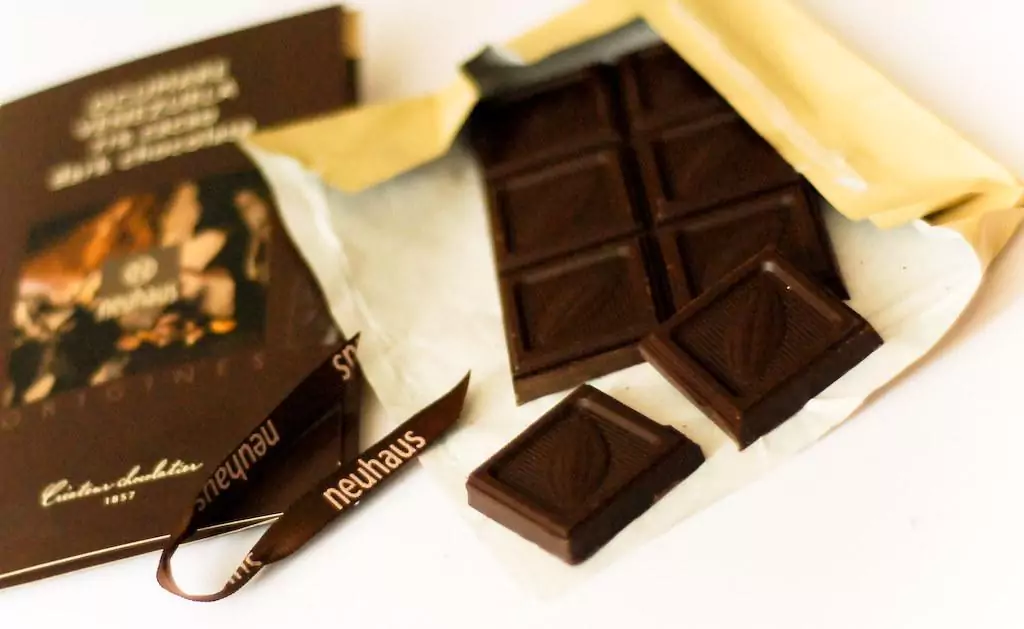
One of Neuhaus premium chocolate bars
photography by: Everjean
The municipal district of St. Gilles is sometimes referred to as a village within a city due to its laid-back vibes, nevertheless, this is somewhat contrasted by its multi-ethnic demographics and medley of architectural wonders, one of which is the massive complex of Saint Gilles Prison.
Notoriously known for its crowded conditions, the prison was built in 1884 according to panoptic principles of planning, articulated by a circular main building interconnected with a couple of wings, while each wing ends with a round courtyard, designated as a recreational space for inmates.
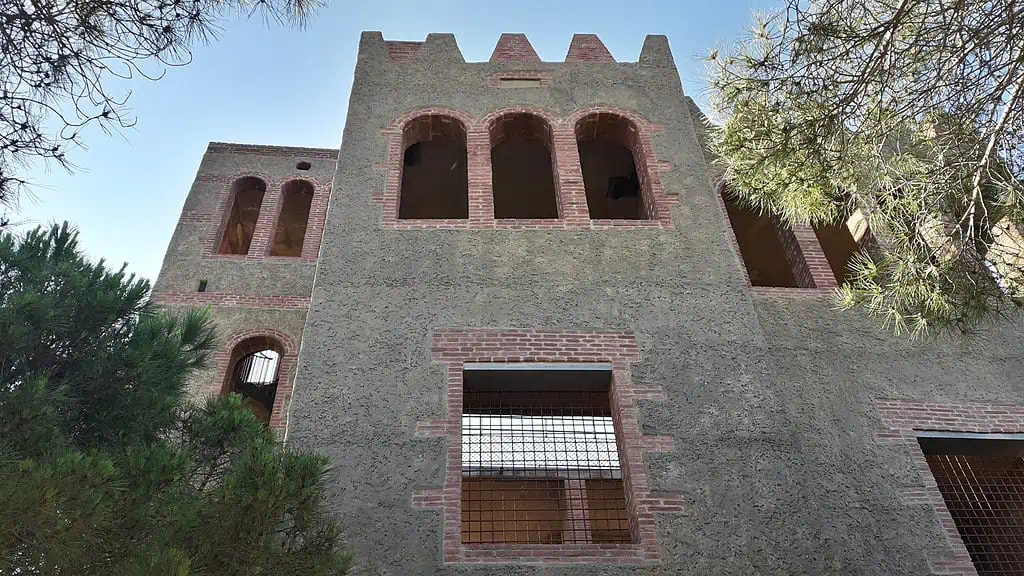
Its quaint 235 meter long façade was designed based on Tudor revival architectural style, mimicking a medieval English castle, culminating in the prison’s most iconic and prominent feature, its main fortified entrance, dominated by four machicolated towers, resembling a picturesque tourist site at a coastal town in France rather than infamous incarceration facility.
Facing St. Gilles Prison on its south side is Forest Prison, planned according to similar principles yet retains its own architectural uniqueness, definitely worth beholding from outside if you’re already there.
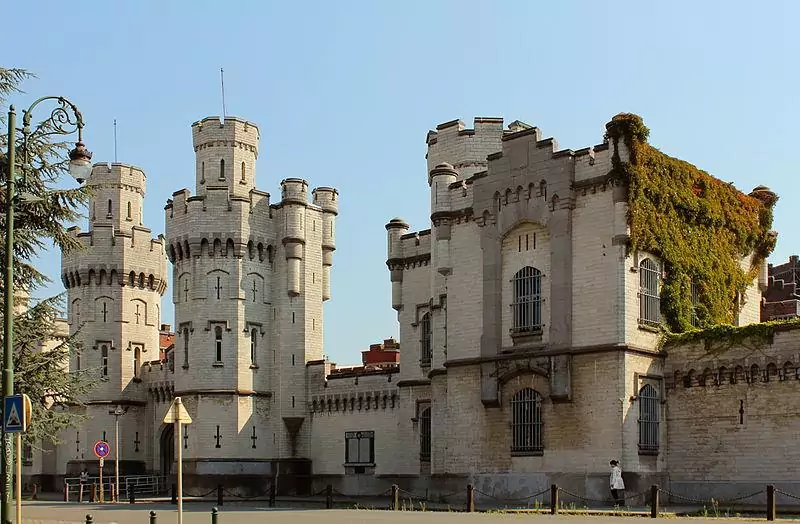
St.Gilles Prison
photography by: M0tty
Brussels Airport is Europe 24th busiest airport, serving over 26 million passengers in 234,460 flights during 2019, functioning as a hub for Brussels Airlines, Belgium’s flag carrier.
As a result of the growing number of flights, the sky around the airport is teeming with aircrafts, making it a hotspot among airplanes enthusiasts, gathering at several locations to spot landings and takeoffs.
Recognized by local authorities, the increasing popularity of airplane spotting at the vicinity of Brussels airport led to the construction of two observatory platforms next to its south side.
Spottersplaats 01/19 overlooks runways 01 and 19, used for landings and takeoffs respectively, and sits on elevated patch of land, whimsically designed as a mini-airport itself. If you opt to visit the platform during day-light, it’s more than possible to stroll in the nearby Speelbos forest.
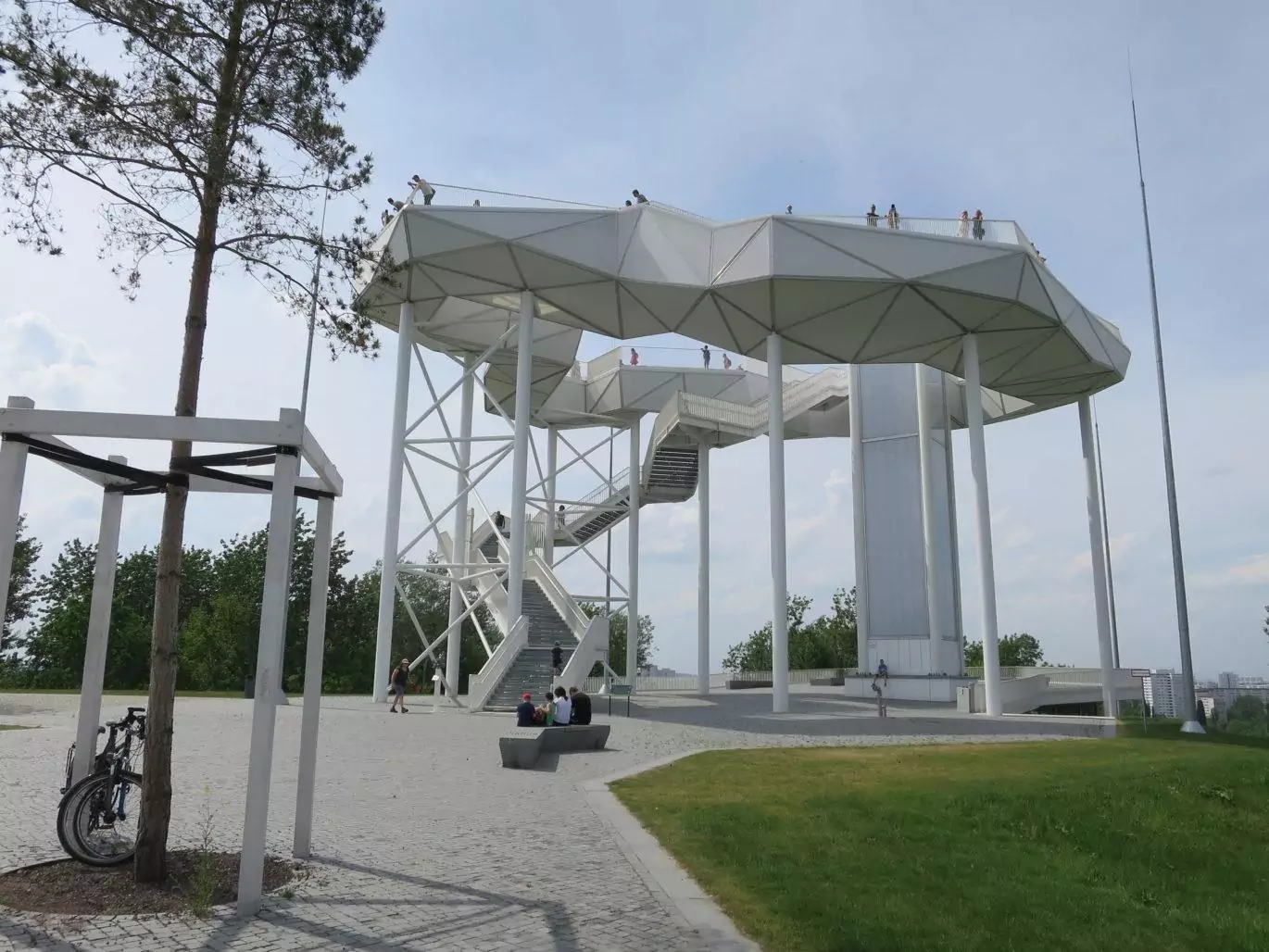
The second platform is Spottersplaats 25L/07R, located more eastward, right next to two detention centers for migrants, providing some spectacular views of air-traffic at runway 25L/07R. Nestled on an artificial slope, the platform is split between several wodden terraces on different levels, each one with its own unique perspective.
Needless to say, but both platforms are an excellent opportunity to meet locals and engage in intriguing conversations.
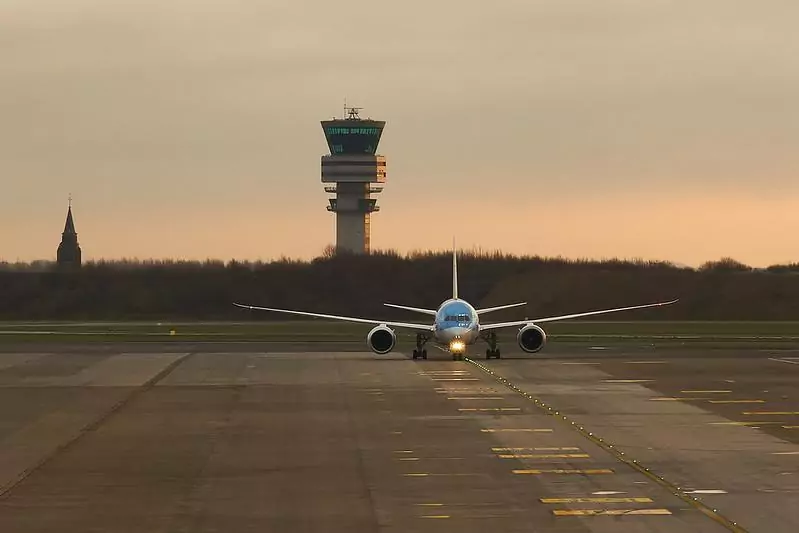
Brussels Airport's runway
photography by: Radek Kucharski
Woluwe-Saint-Pierre is one of 19 municipalities within Brussels capital region, due to its residential character not many outsiders bother to visit this part of the city as tourists, yet if you seek to be surrounded by trees while providing company to wild animals, then you should consider getting there, as a seamless series of parks stretches through vast areas.
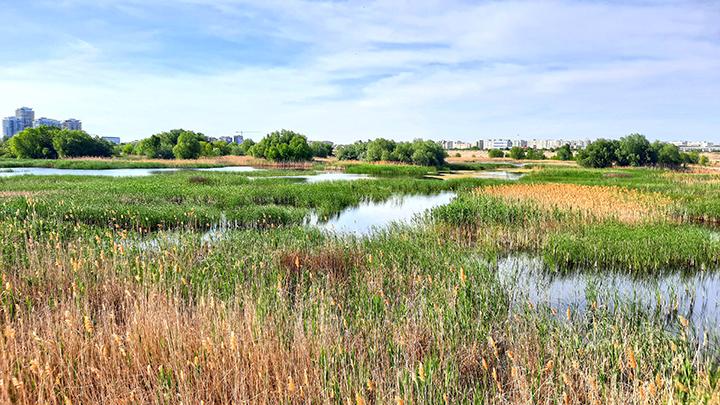
Named after the many sources feeding its ponds, Parc des Sources is a pristine piece of nature engulfed by urban environment. Its artificially dug pond is home to several types of hydrophytes, most notably yellow water lilies, colorfully decorating the surface and contrasting its marshy water.
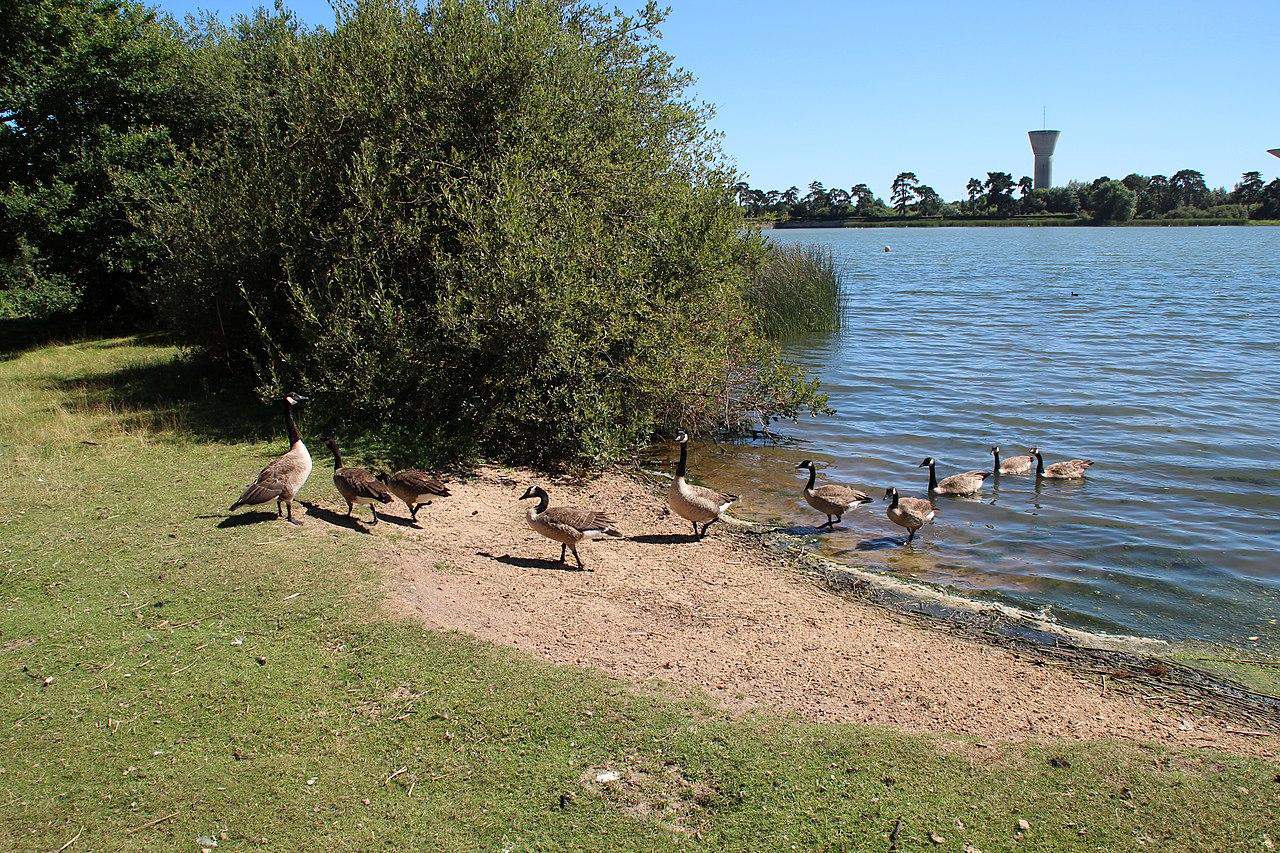
Slightly southwards is Parc des Étangs Mellaerts, which is dominated by two little lakes, serving as a magnet for water birds like swans and Egyptian geese, romping around the park and creating somewhat squeaky musical backdrop for visitors to listen.
During summer and spring time the smaller sized pond is a popular spot for fishing while the larger one is teeming with paddle boats.
However, by far the largest park in the green network is Woluwe Park, created at the request of King Leopold II to attract the bourgeois class, it offers an English-style hodgepodge of lawns, groves and ponds, perfectly suited for an afternoon picnic.
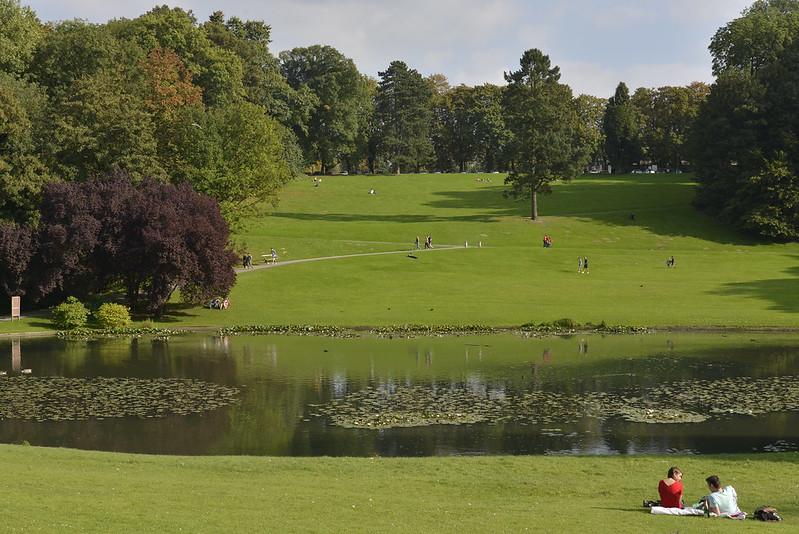
Brussels’s Woluwe Park
photography by: Stephane Mignon
Following the industrial revolution in Europe during the 19th century, Belgium became a global player in international trade, utilizing it access to the Northern Sea to commercially link major markets in Europe and beyond.
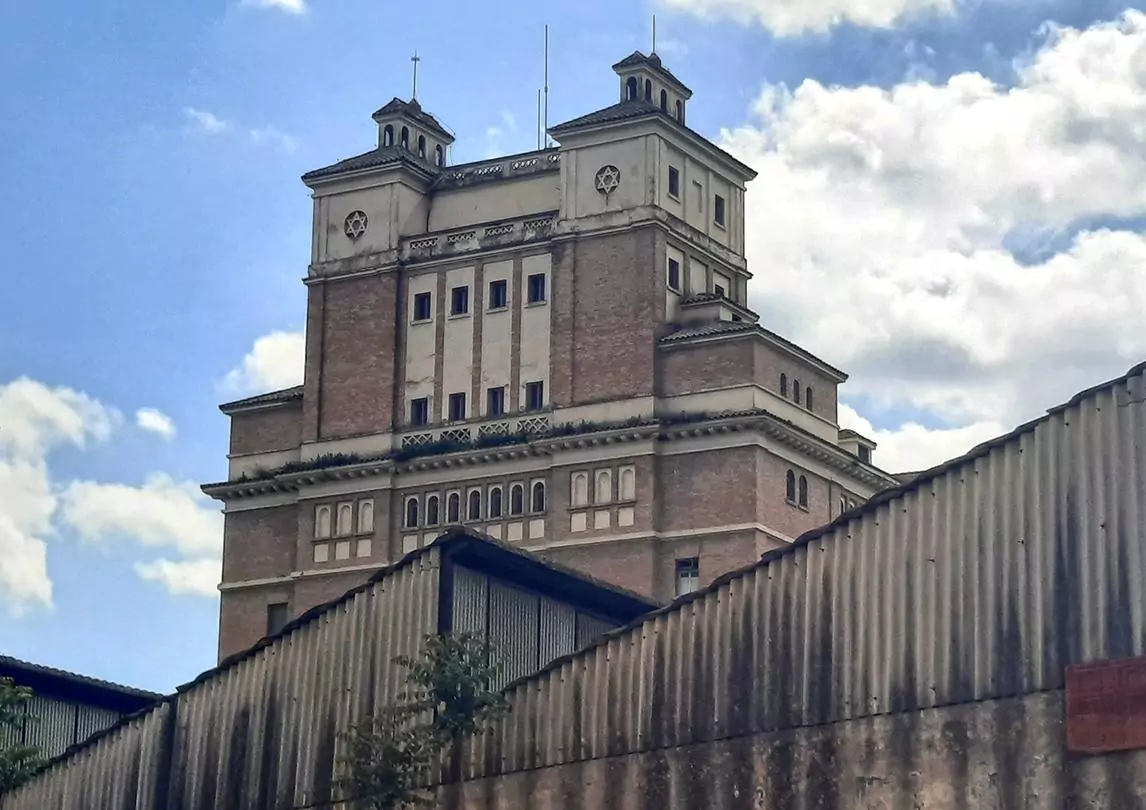
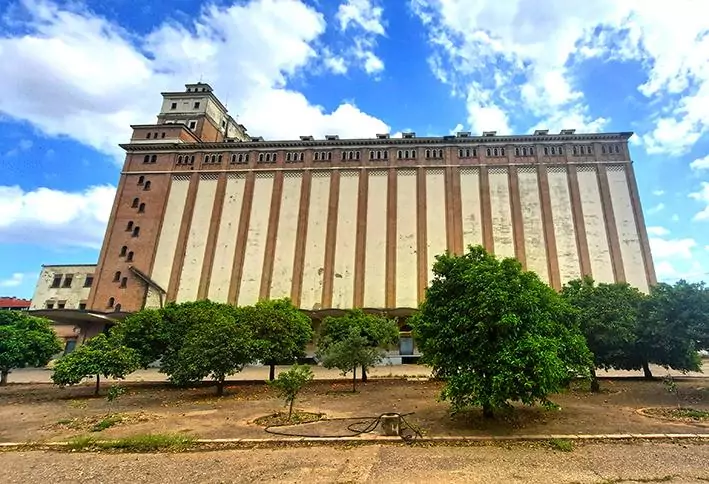
In order to facilitate the country economic growth and role as a trade center, a gigantic complex consisting of a 40,000 m2 freight station and several warehouses was constructed on the banks of the Wilebroek Canal, a water passage connecting Brussels to the Northern Sea via Sheldt River.
Named after the German family who owned the land, the Tour & Taxis complex operated for decades as a mega distribution center of goods, arriving by water, railways and roads.
As countries in Europe merged economically by signing a free economic zone treaty and improving their road infrastructure, Tour & Taxis became redundant as a shipping center, paving the road for its rebirth as a convention and recreational hot spot.
Currently, two of the former warehouses and the administrative building were repurposed as a multi-functional complex, meticulously preserved, both at their interior and exterior, highlighting the 19th-20th Art-Nouveau industrial architecture and extremely large vertical space, typical of large storage facilities. Since each of the buildings has plenty of unconventional shops and venues, it’s always interesting to simply stroll across the buildings, horizontally and vertically alike.
Tour & Taxis hosts a plethora of events, including some unique art exhibitions, music festivals and gourmet food fairs, that why it’s recommended to check the schedule at their official website prior to your visit.
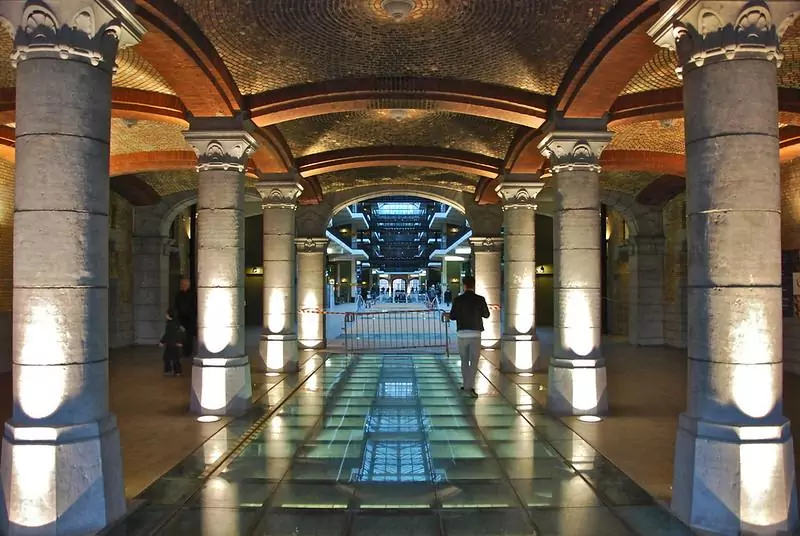
Tour & Taxis interior splendor
photography by: Stephane Mignon
Located at the outskirts of Brussels, adjacent to the Sonian Forest, Red Cloister is a former priory with a turbulent past spanning over centuries of devastation and regeneration.
Originally, a priest and a layman established a hermit community on the edge of the Sonian Forest, aligning all of its members to the rule of Saint Augustine, a 4th century religious document advocating for an ascetic lifestyle of modesty and poverty.
During its four centuries of existence as a monastic settlement, the abbey was constantly expanded, utilizing the local abundance of materials such as wood and sandstone to construct additional buildings, one of which is the famous library, notable for its exceptional illuminated manuscripts, acknowledged even by looters who plundered the complex throughout the history, yet spared the library and its content.
Nowadays, the hermitage and its surrounding buildings function as an art center, hosting exhibition of contemporary local and international artists, inspired by its role as a pilgrimage site for renowned artists since its inception in 14th century.
Yet, what makes this monastery complex exceptionally charming is not only its rich past and plethora of art pieces to awe at, but also its surrounding natural reserve, consisting of several marshy ponds which attract plenty of birds like blue herons and kingfishers, rare bat species and amphibians.
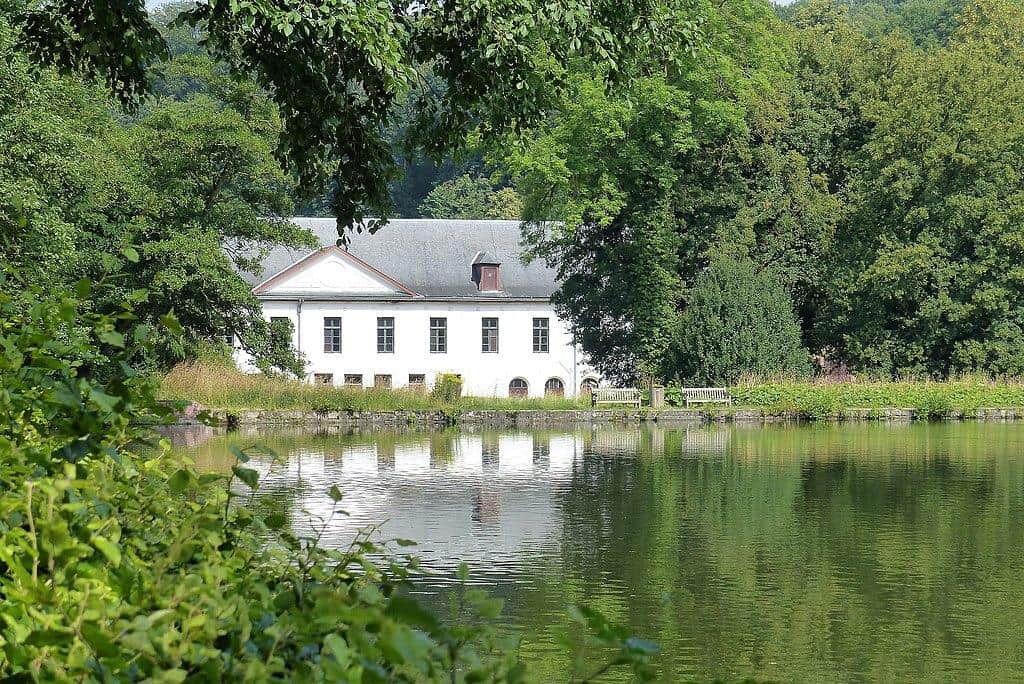
The Red Cloister and its surrounding pond
photography by: Horst J. Meuter
It’s often the case where modern art seems to gain a bad reputation, as it tends to be more abstract, at least on the minds of its most vocal critics.
While classic art-masterpieces are revered for their immense complexity, its contemporary parallel frequently branded as inferior and irrelevant, whether it’s true or not is up for you to judge, however, Atelier 34zero is the perfect place to challenge those strict assertions by yourself.
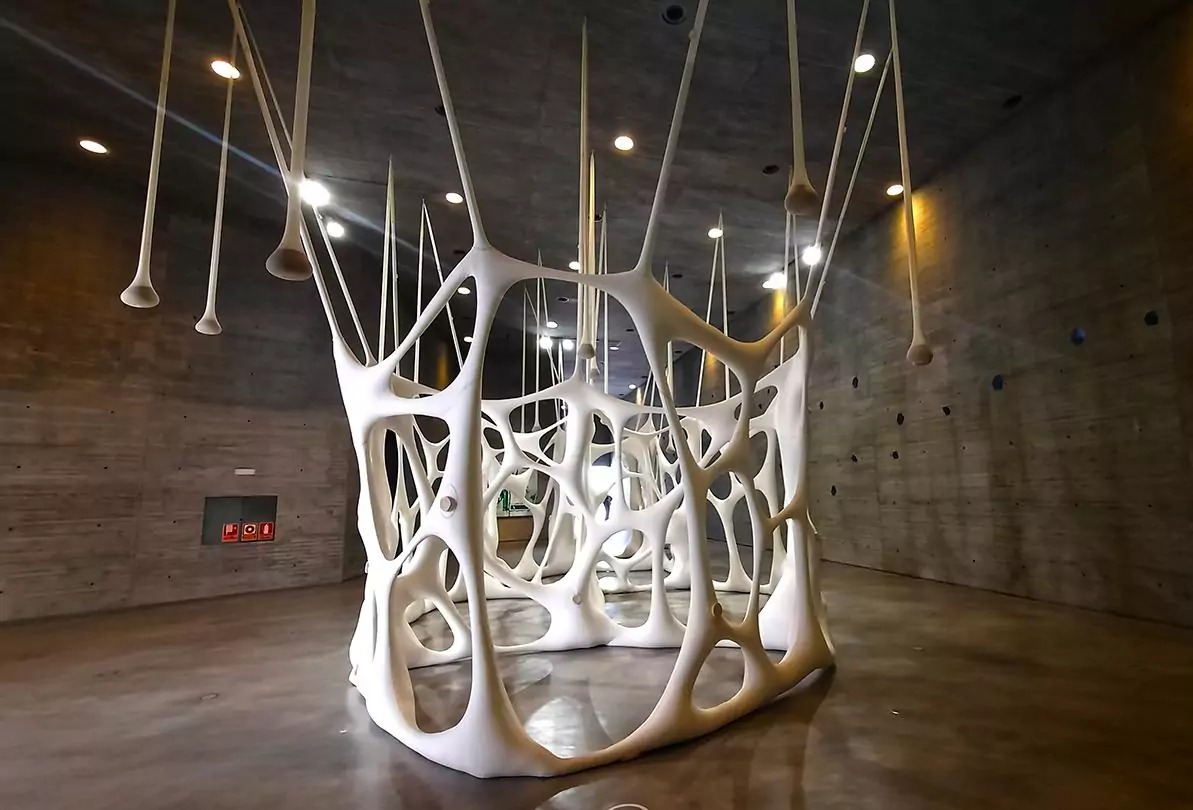
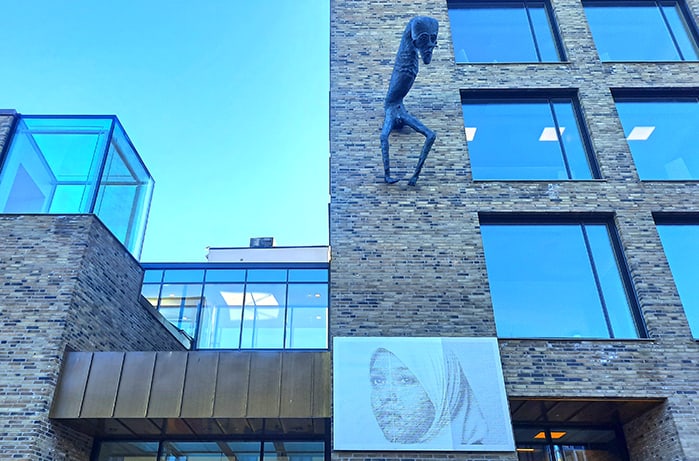
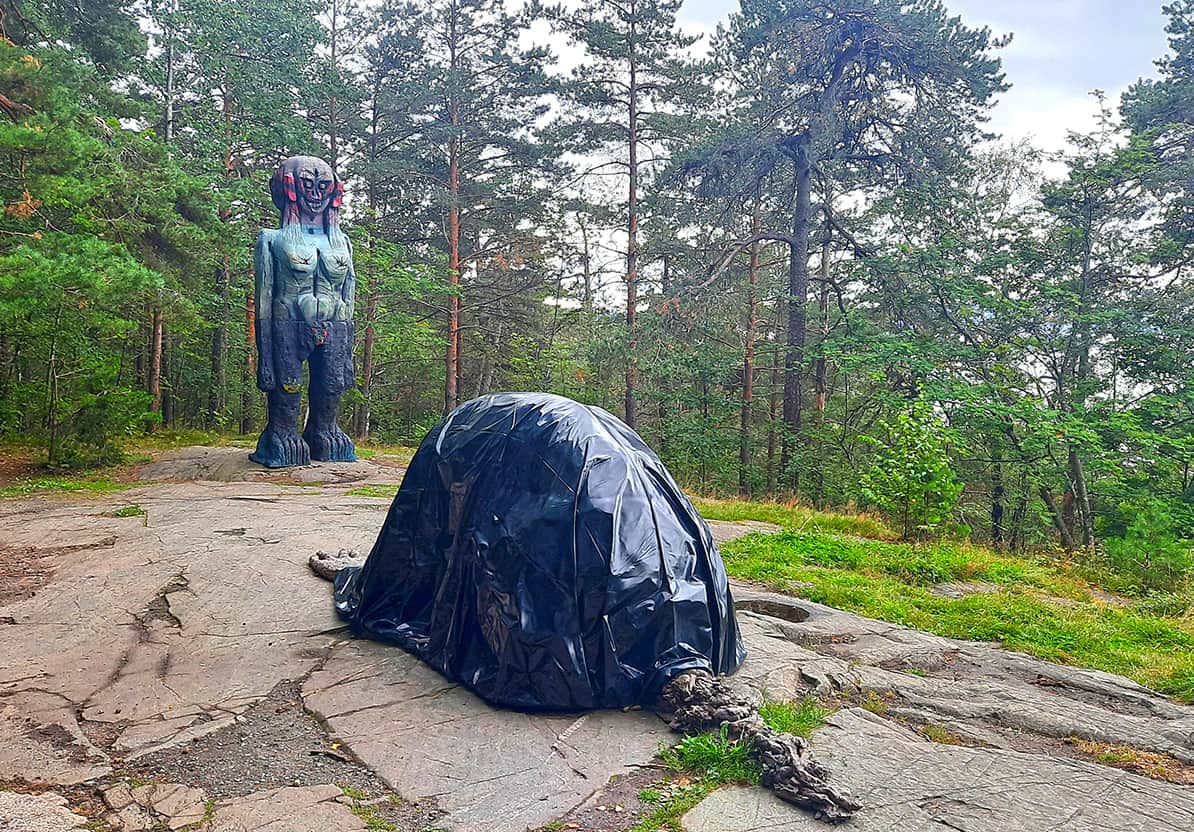
Situated in Jette municipality, Atelier 34zero is an art center showcasing contemporary three-dimensional art, mostly by promising local talents, making use of it as platform to achieve broader acknowledgment.
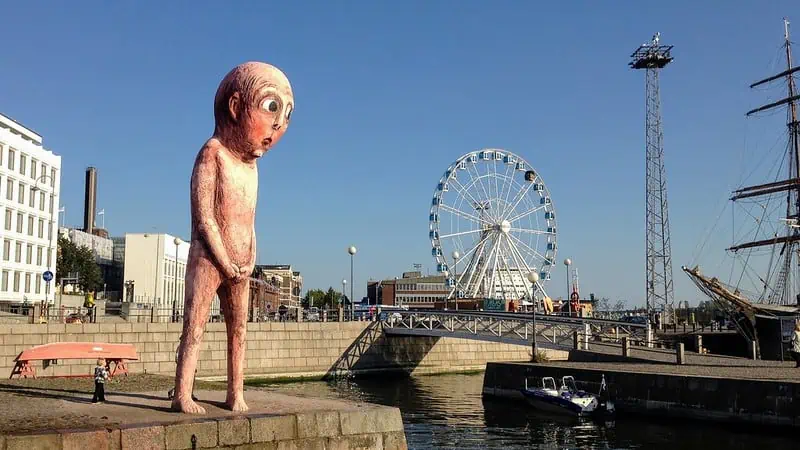
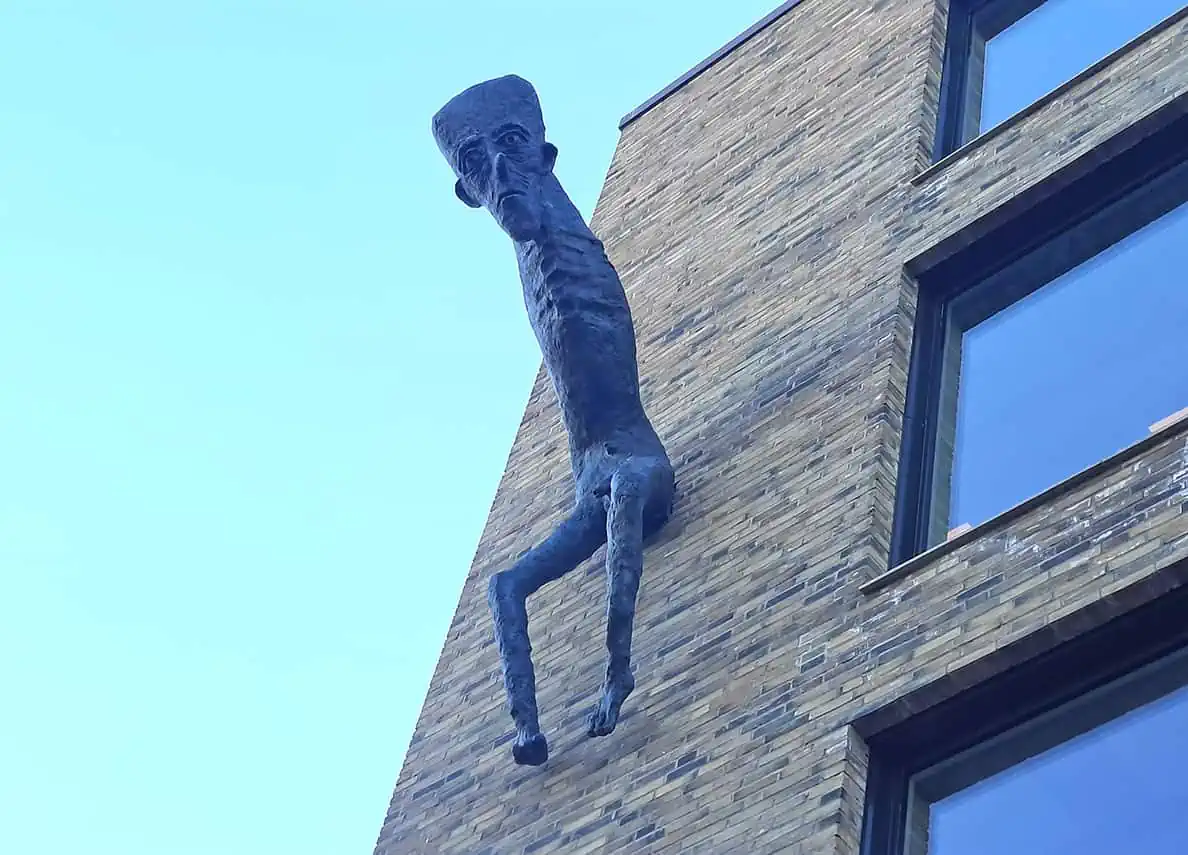
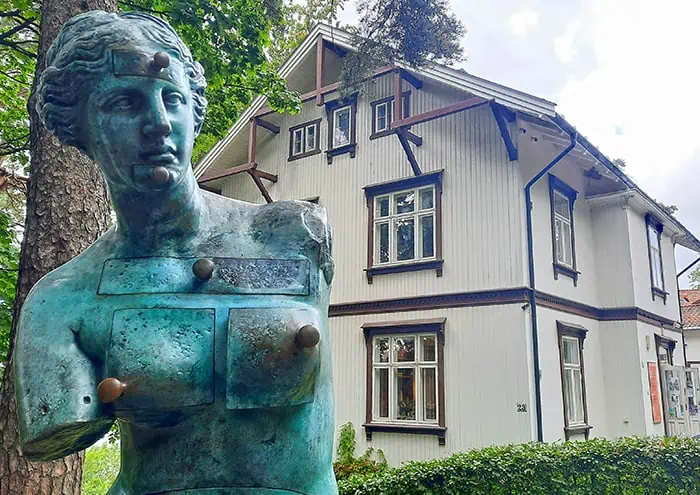
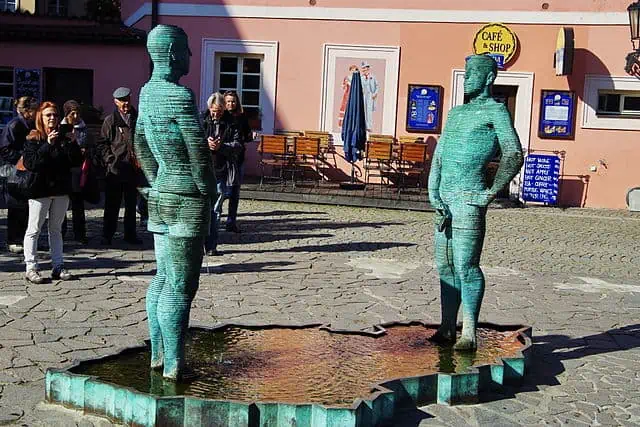
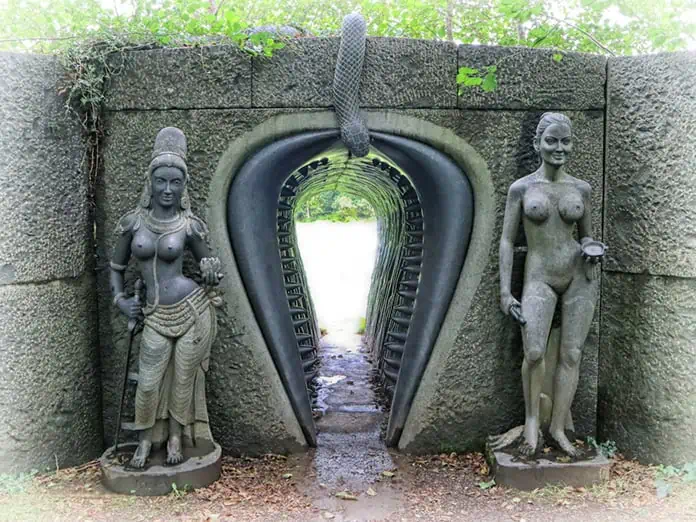
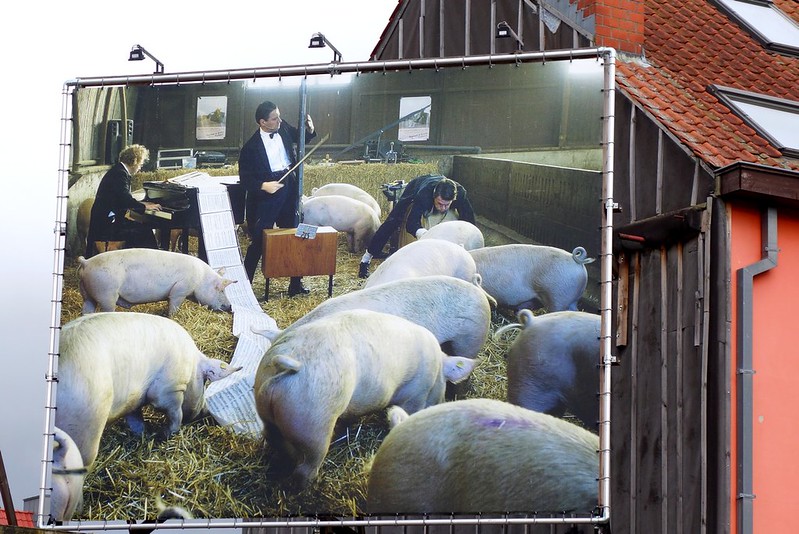
In contrary to generic museums, Atelier 34zero is unapologetically bold, displaying controversial sculptures and photography, manifested by naked figures and morbid caricatures, subsequently making it slightly excessive for the faint hearted, yet extremely amusing and enjoyable if you happen to be open-minded about that.
Besides the exhibition space, the center also features a fashionable café with an art packed backyard and a bookstore offering artistic related literature, ranging from art and design to architecture.
Originally created by King Leopold II in 1900, Stuyvenberg Park is one of the most underrated public gardens in Brussels, despite being remarkably pleasant and graceful.
The park is actually a small fragment in a gigantic green space encompassing the entirety of Laeken’s northern part, yet lesser known and visited in comparison to other parks in this large network of gardens.
One of Stuyvenberg Park’s prime features during its inception was the Colonial Park, designated for cultivation and acclimatization of indigenous plants from Congo, one of Belgium’s overseas colonies. The botanical research itself took place inside six greenhouses constructed at the site, eventually dismantled during the 1960’s and replaced by a lawn, as the plants were relocated to the National Botanical Garden of Belgium.
The ornamental garden on the other hand was thoroughly rehabilitated in 1999, providing visitors with a truly magnificent place to explore. Unlike other aforementioned green spaces, Stuyvenberg Park is meticulously designed, leaving less room for wilderness to take over, as every inch of it is carefully crafted.
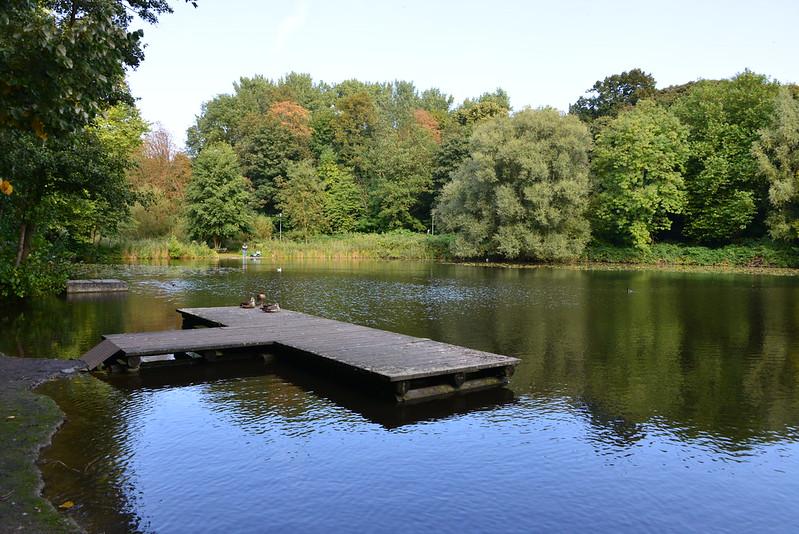
While an exceptional collection of flora is centered around two rectangular ponds packed with hydrophytes and bounded by a wooden deck and lawns, the park’s apex are the several iconic lookouts including a diagonally striped wooden structure, offering spectacular panoramas of Brussels.
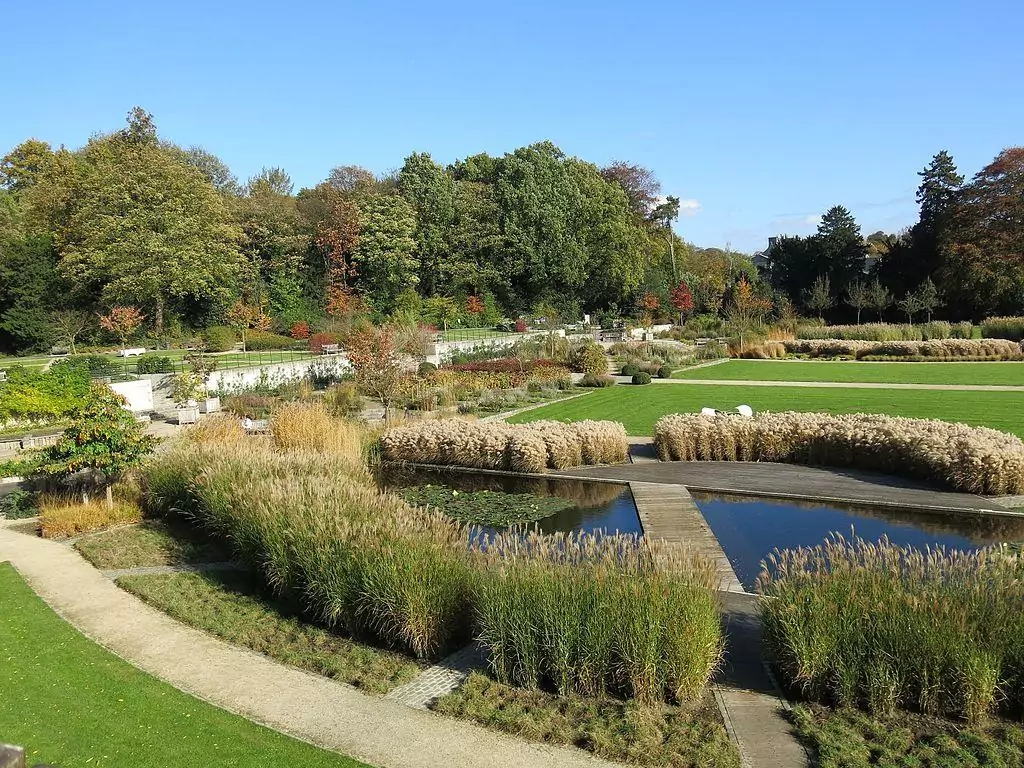
Stuyvenberg Park’s ornamental garden
photography by: Filharmoniker