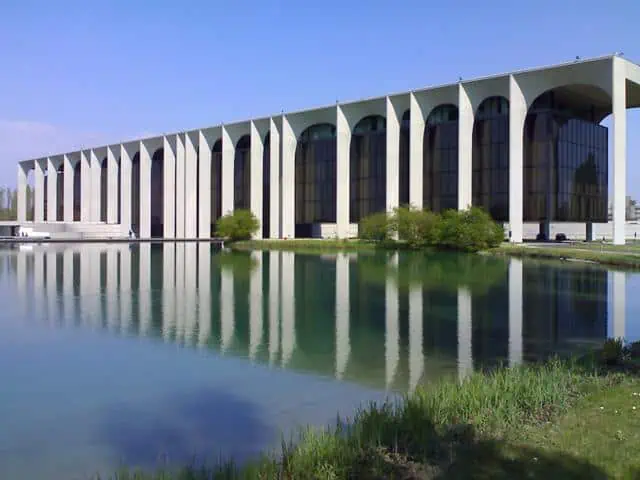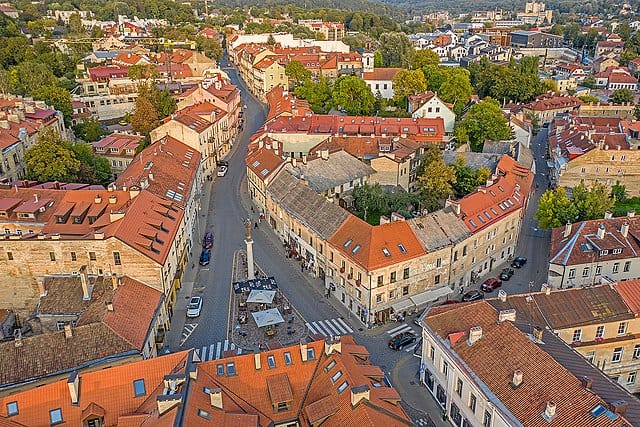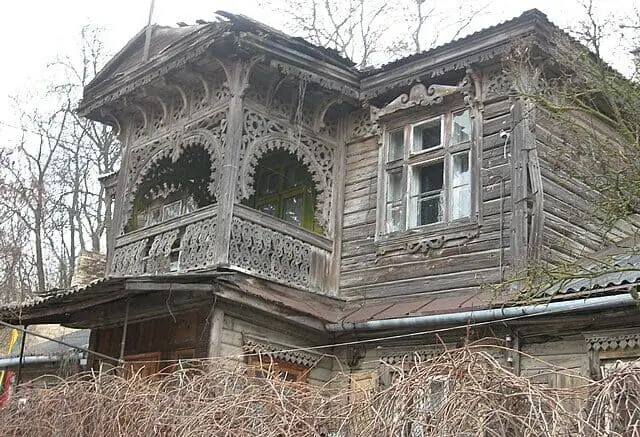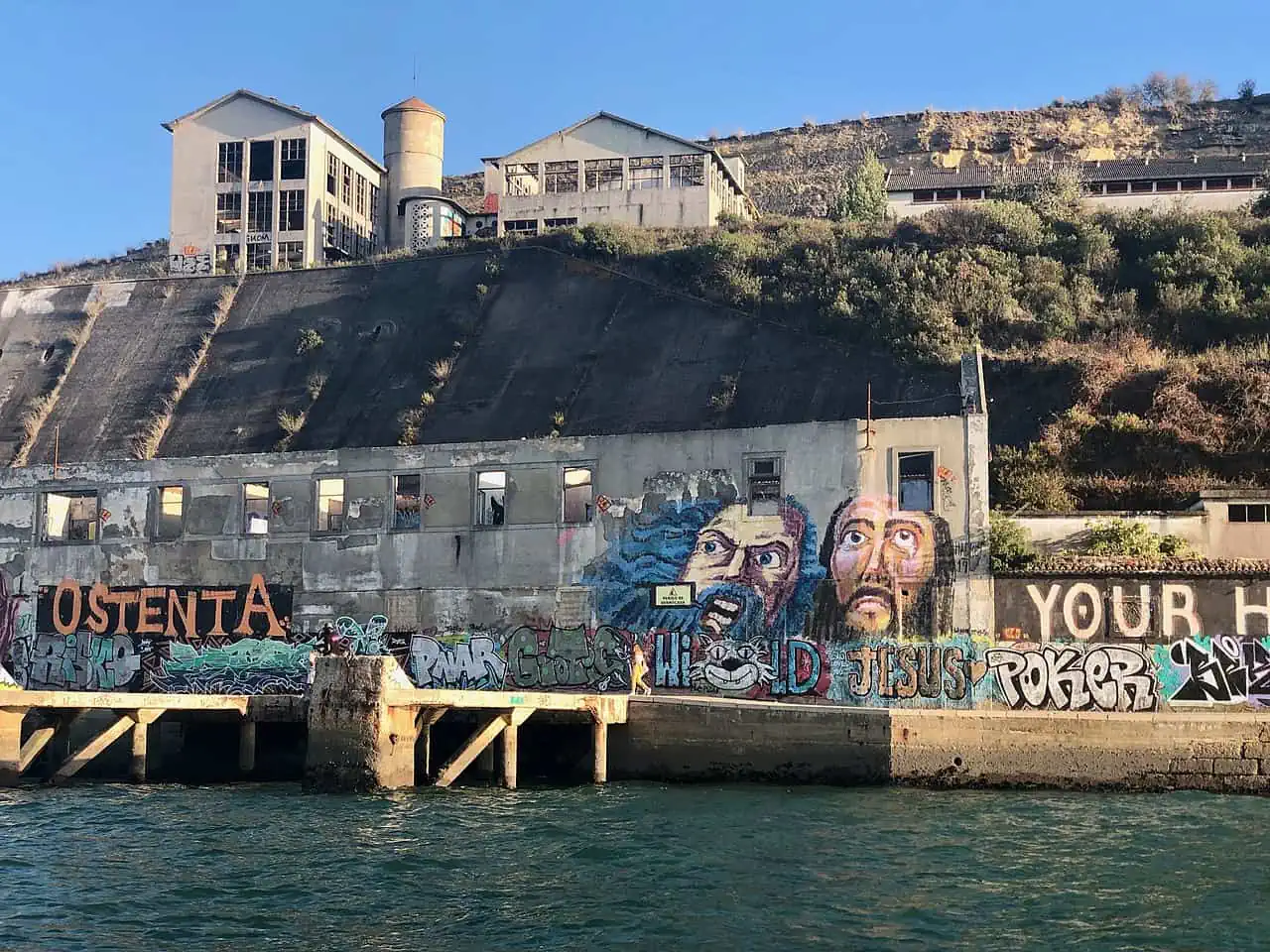

Visited by more than 6 million tourists annually, Madrid is one of the most popular tourist destinations in Spain, the second most visited country on Earth. It should come as no surprise that much of Madrid is often overwhelmed by swarms of international travelers, transforming its center to a tourist oriented area. For those of you who wish to experience the more authentic and off the beaten path parts of Madrid, here are 8 places to explore, yet to be vastly discovered by non-locals.

By: Omri Westmark
Date: 00:05 06.06.20
Last Update: 11:02 30.07.21
Madrid is home to endless array of shopping options, from flea markets to international brand stores such as Primark, consequently visitors find it extremely easy to locate a satisfying place to buy whatever they wish for.
While El-Rasto flea market is definitely popular among tourists, it’s usually the open-air bazaar at Sundays that draws most visitors, thus leaving less attention for other events taking place at its narrow streets.
One of which is Santa Ana street market on the first Saturday of every month, offering a rather unique and multi-sensual experience of live concerts, workshops, delightful culinary bites and more, making it favored by locals. It’s advisable to visit the official website for more information regarding special offers and performances.
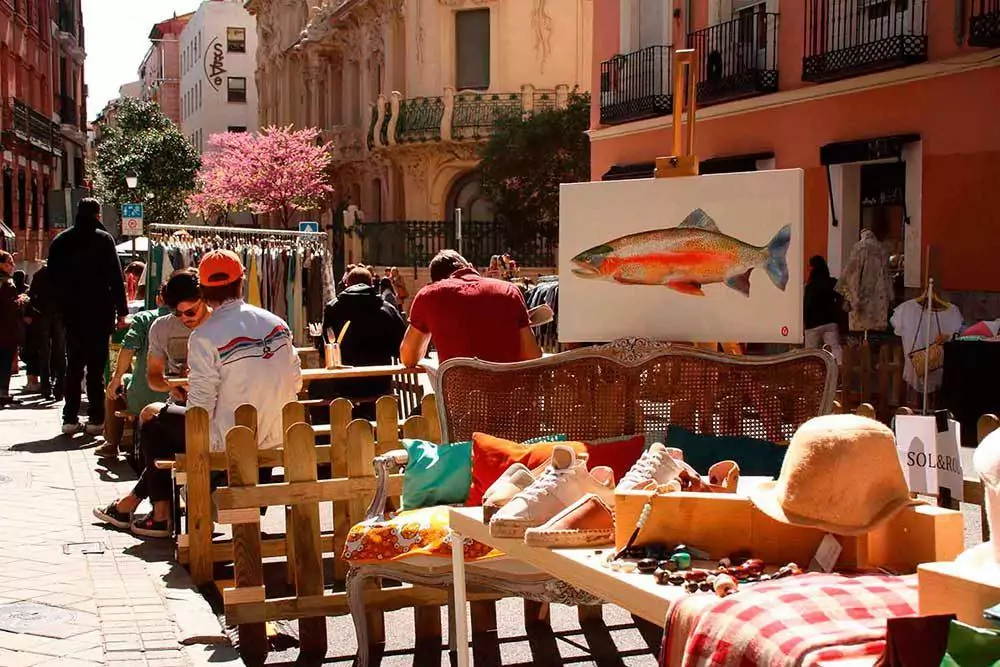
Santa Ana Street Market
photography by: Diario de Madrid
Eyesore or architectural wonder, it’s impossible to ignore Torre Blancas, an eerie mixed use building made out of exposed concrete, serving as an icon of the Spanish Organicism architecture.
This weirdly shaped edifice was designed by Francisco Javier Sáenz de Oiza and completed at 1969, an era characterized by brutalist buildings popping up all over Europe, but unlike its parallels, Torre Blancas stands out for incorporating round modular forms, portraying it as less intimidating and more theatrical and futuristic.
Interestingly, its circular façade is also reflected in the interior, which is made up of many round shaped rooms and spaces, hence it’s worth trying to ask tenants for permission to visit inside.
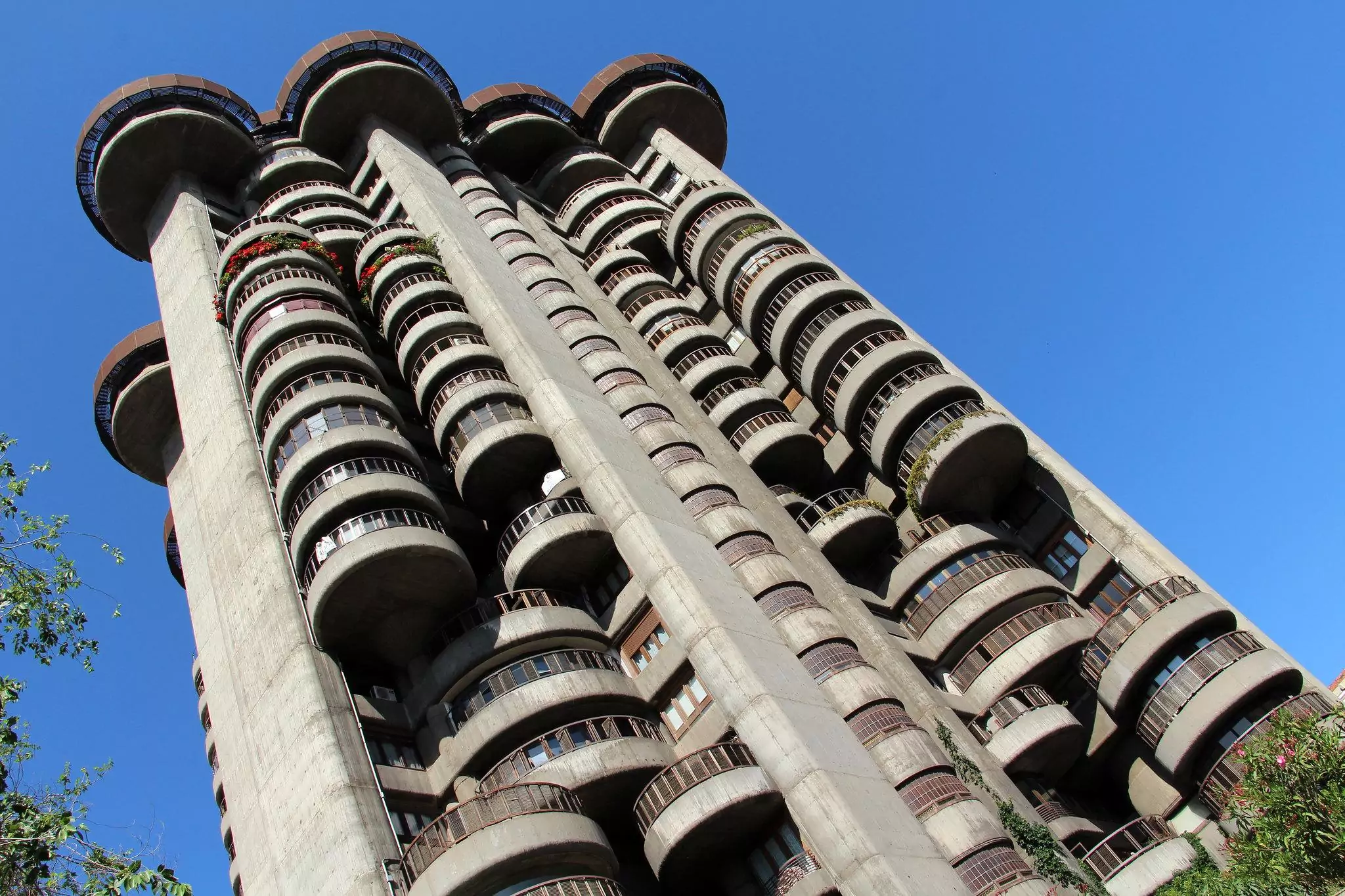
Torre Blancas
photography by: Fred Romero
Blessed with well-maintained public green spaces, Madrid has plenty of parks worth visiting, some are world-renowned for their charm and graceful design, attracting many foreign visitors.
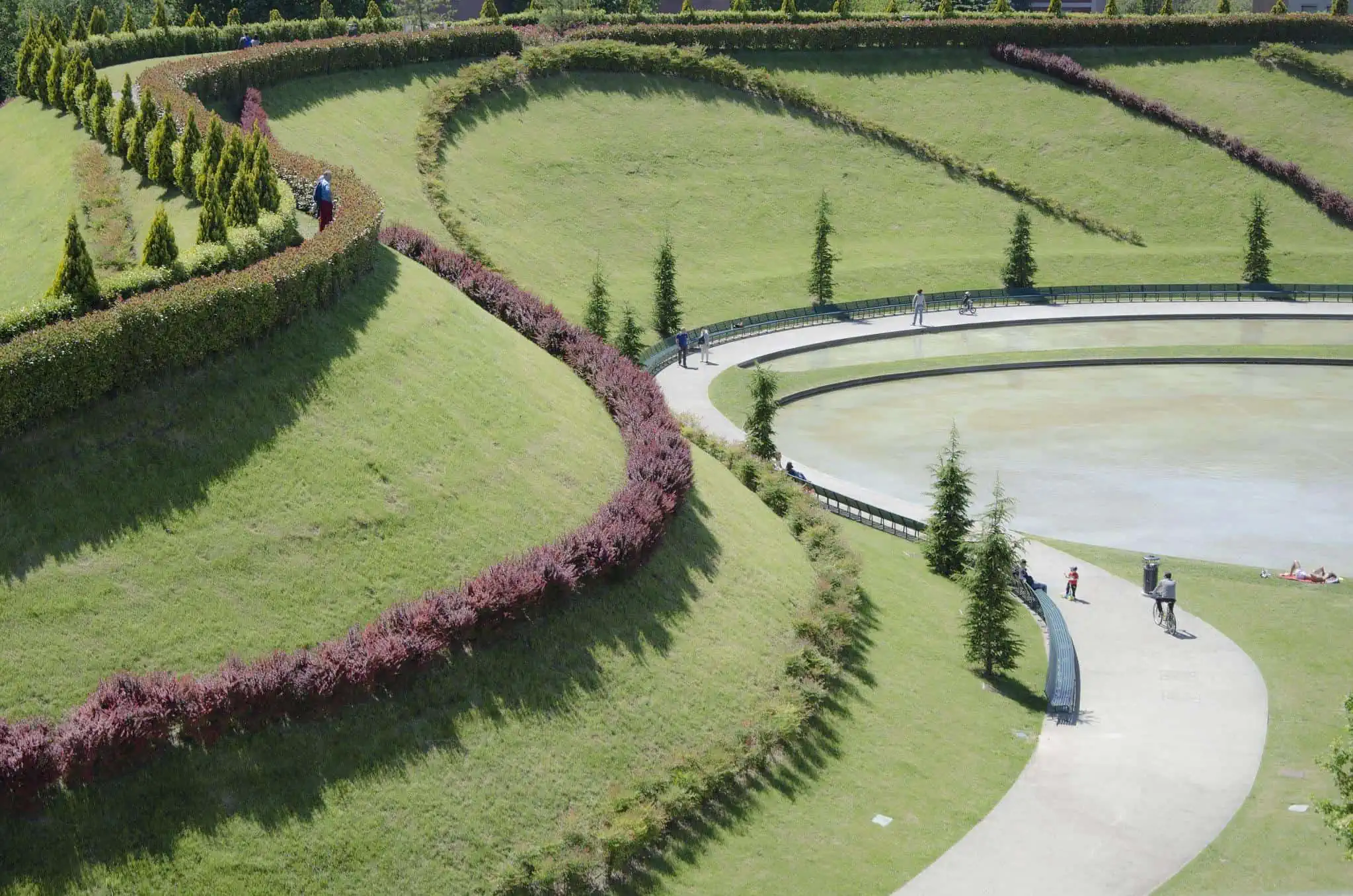
Just until recently it was covered by a busy highway, today Río Park is one of the most pleasant places to visit in Madrid. Completed in 2011 as a rehabilitation project of the Manzanares Riverside, the relatively new park is popular among locals but remains unnoticed by the bulk of international visitors, opting more classic options.
The Park has extensive network of bicycle lanes, stretching along the river and crossing it at the modernly designed bridges, iconic landmarks by their own right. Adjacent stores offering bike rental for 5-6 Euros per hour, making it the perfect getaway activity for a sunny afternoon.
Once done with the cycling, you can visit the nearby Matadero, Madrid former slaughterhouse, which nowadays functions as an exhibition space complemented by an excellent restaurant serving coffee and local snacks.
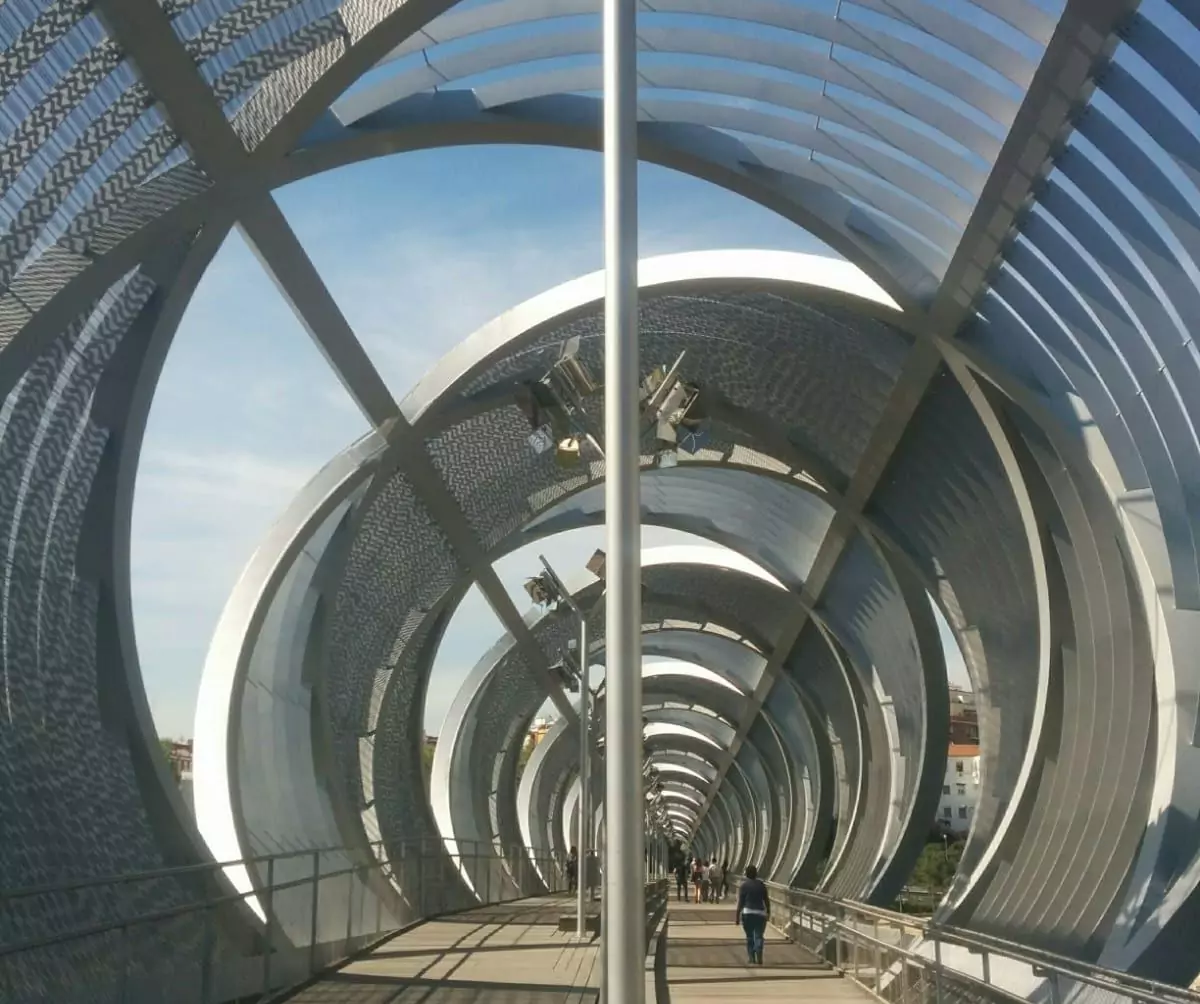
The modern pedestrian bridge at Río Park
photography by: Omri Westmark
A formerly separate town and nowadays municipally part of Madrid, Vallecas is a mundane working class neighborhood with no places of interest for the average tourist, nevertheless, one of its avenues was revolutionized as part of a global green trend, making it worth coming for those of you who wish to explore how urban revival project affects suburbia.
Bulevar de la Naturaleza is the main avenue of the newly built extension of Vallecas, a characterless suburban layout, built to accommodate large volume of vehicular traffic.
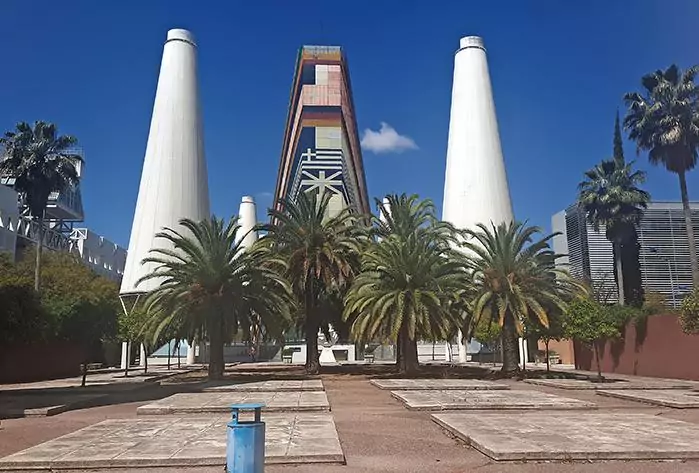
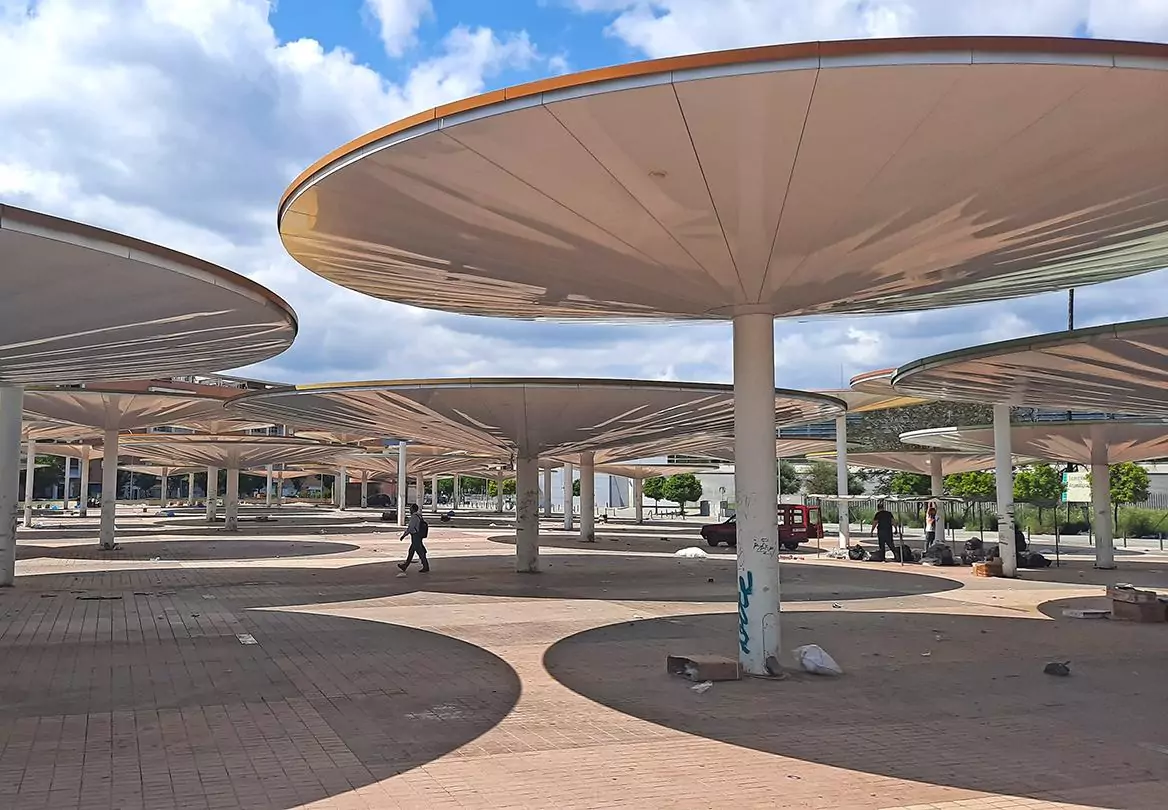
In 2007 the avenue was rebranded as Eco-Boulevard and transformed itself from an empty thoroughfare into a vibrant public space by constructing 3 cylindrical structures and allocating large proportion of the roads for pedestrians.
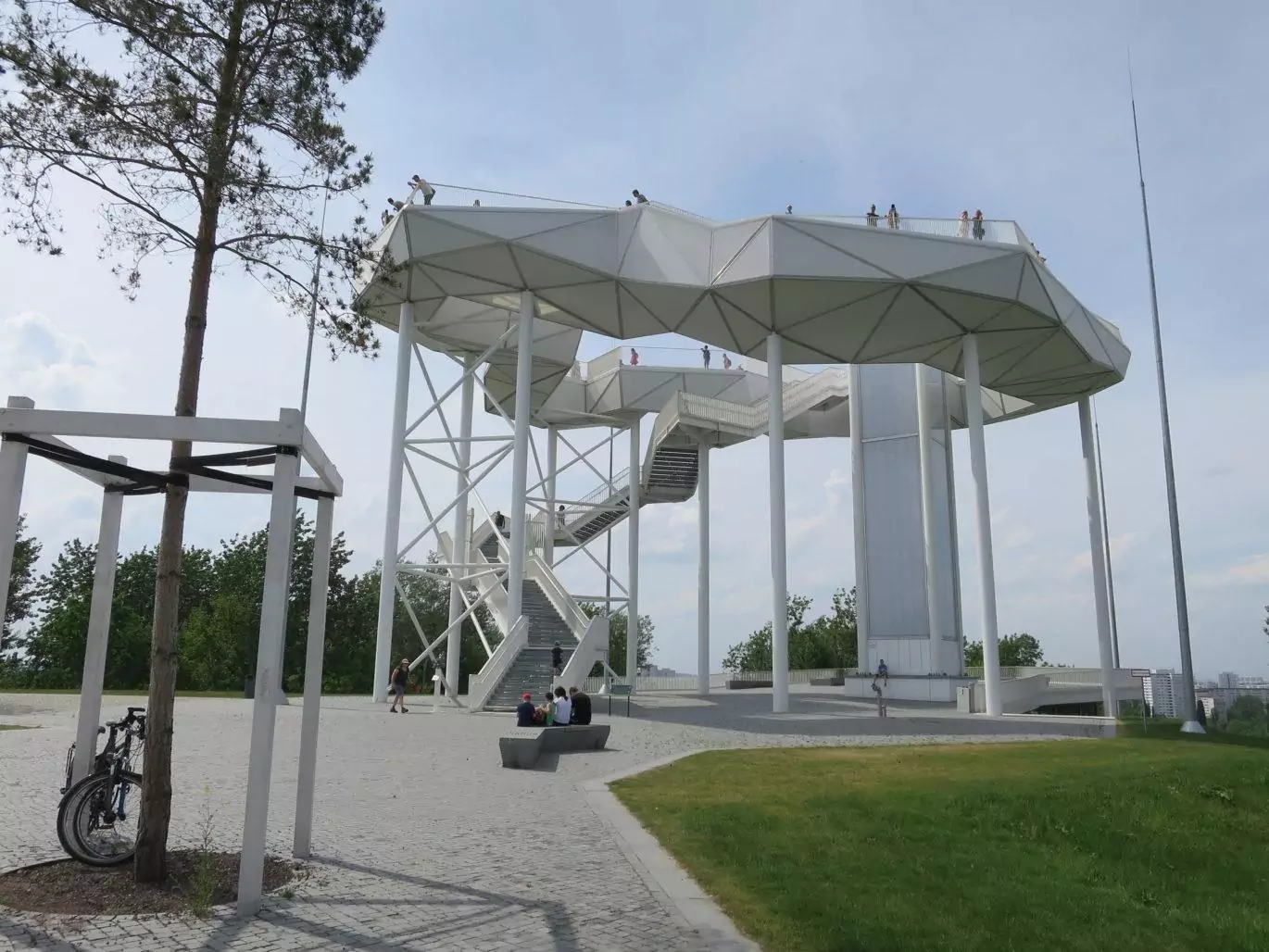
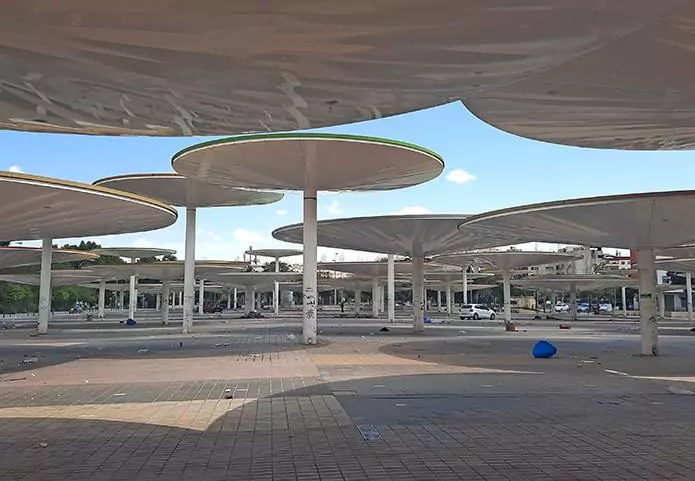
The three giant metallic structures dominating Eco-Boulevard aimed at mimicking trees and encouraging street gatherings by creating a micro climate, significantly cooler than the surrounding streets. Those giant oddities generate electricity by solar panels and are completely self-sufficient, achieving both the goals of being environmentally friendly and socially regenerating at the same time.
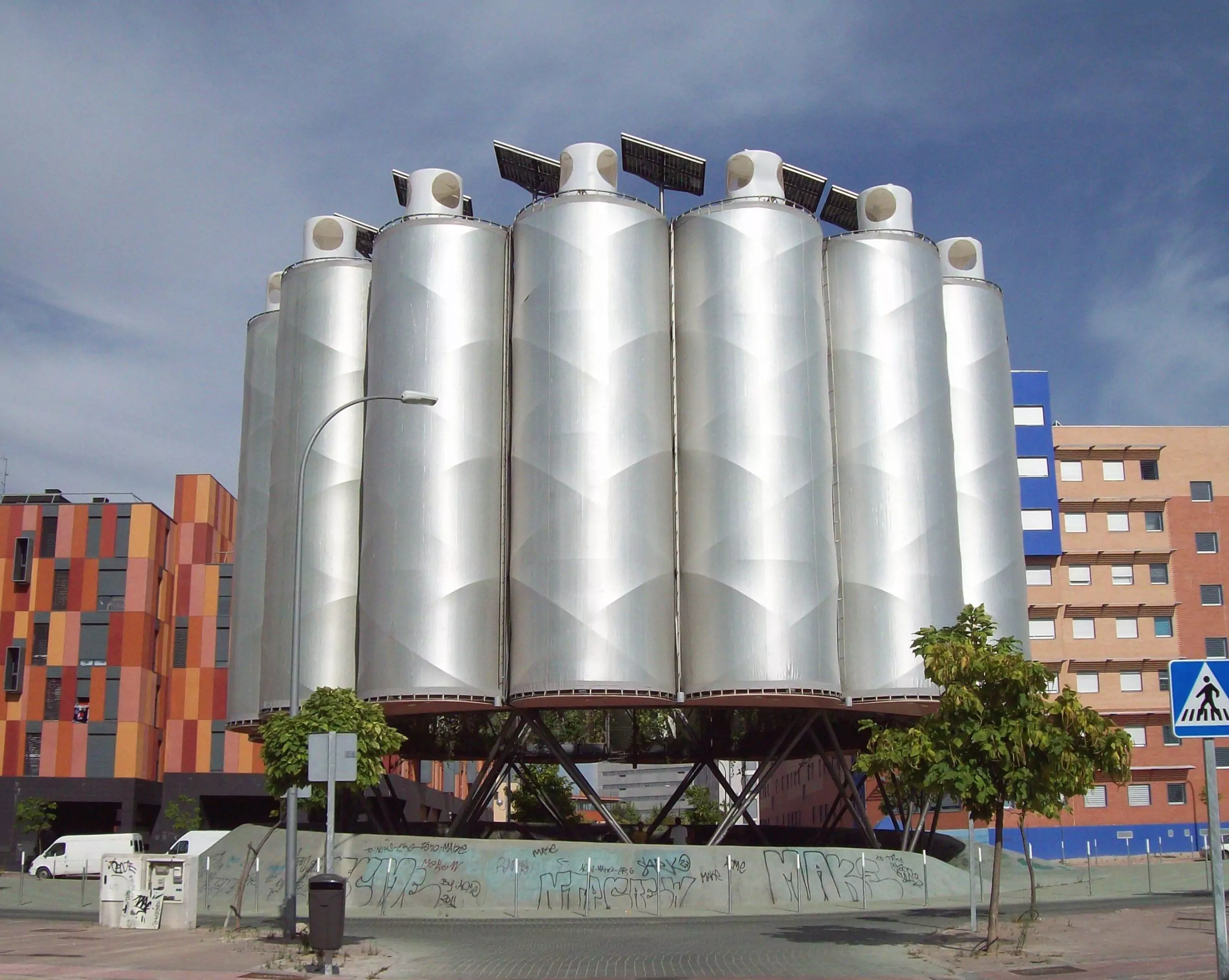
One of three artificial tree structures in Eco Boulevard
photography by: Luis García
As the capital city of a traditionally Catholic country, Madrid has an abundance of Iconic churches attracting swarms of camera armed tourists, nevertheless, few Catholic temples in less central parts of the city are still waiting to be discovered, one such fascinating church is Parroquia San Pedro Mártir, built in 1960 as part of a convent complex.
Nestled along a busy highway in the northern part of the city, The Church of San Pedro the Martyr has a modest appearance, yet the closer you get, the more complexity seemed to be uncovered, reviling the many intricate elements such as the ambient metallic nest around the cross topping the church.
The church’s interesting yet minimalistic exterior is dramatically contrasted by its interior, a spectacle to be awed at. Intended to host 250 choir members and 750 worshipers, Parroquia san Pedro Mártir fuses lights from the juxtaposition of bricks, the eye-catching stained glass and the blueish skylight, all merging into a multi-color extravaganza, serving as a backdrop for the mesmerizing chorale.
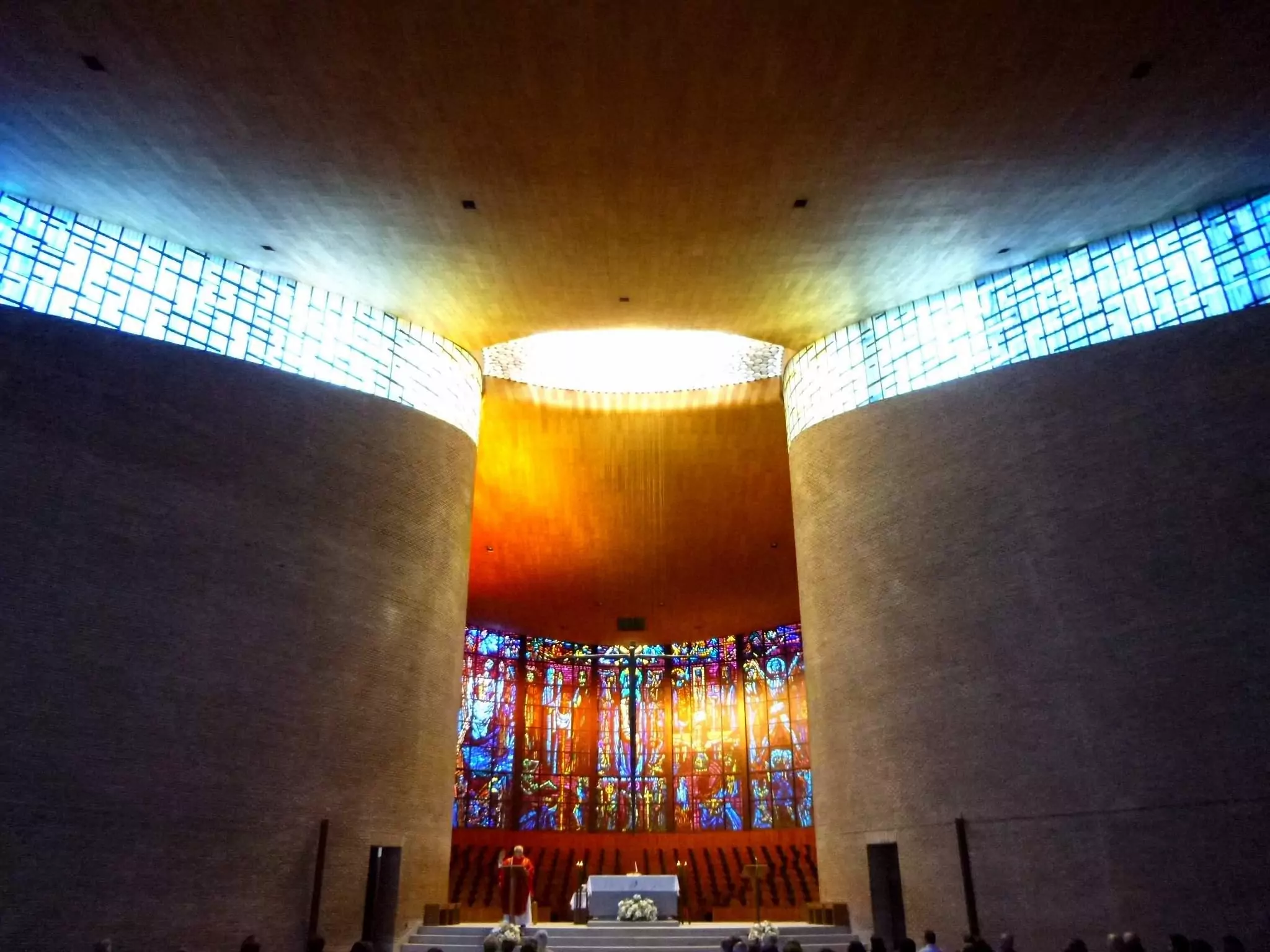
The interior of Parroquia San Pedro Mártir
photography by: Zarateman
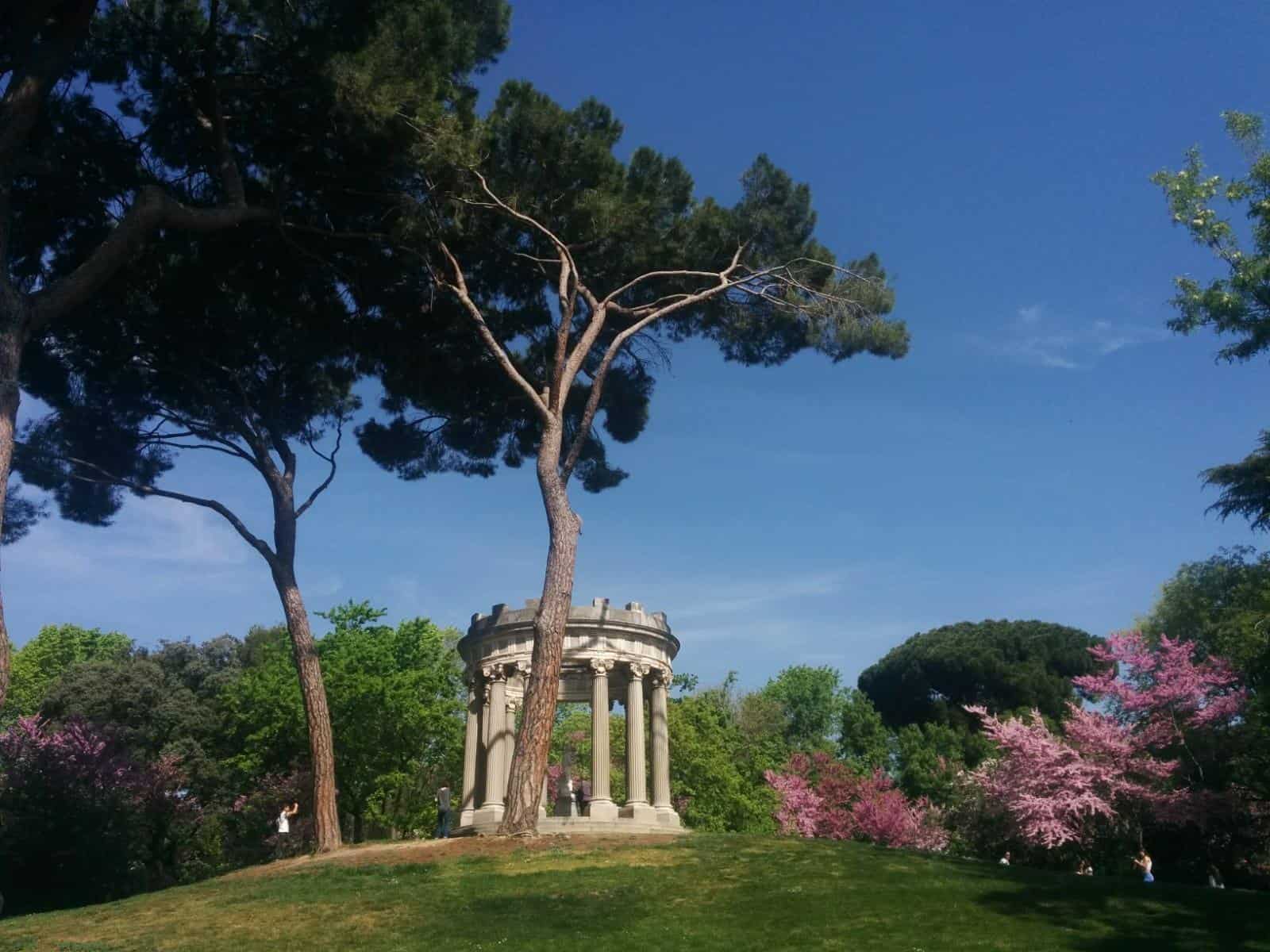
Dwarfed by the nearby Barajas international airport and Juan Carlos Park, the garden of El Capricho is Madrid’s ultimate hidden gem, owing this title mostly to its location, a cluster of real estate projects and highways, intuitively unrelated to such a delicate historic site.
The garden was created in the 18th century as part of the Duchess of Osuna estate, at a green meadow outside the city, nowadays engulfed by the recent urban expansion, somewhat explaining the contrasting scenario.
El Capricho is translated as whim, correlating to the garden’s whimsical character, manifested by the fairytale design, featuring a plethora of different styled structures and elements, surprisingly diverse both architecturally and naturally.
Dominating the southern part of the garden is a labyrinth made of trimmed hedges, fitted for a human scale Pac-Man, while further ahead is Casa de la Vieja, a stony building inspired by a farmhouse and partly consumed by climbing vegetation, yet one of the most photogenic sites in El Capricho is the neo-classic gazebo aka Temple of Bacchus, providing the perfect backdrop for a multi-likes Instagram selfie.
The garden’s most unique and famous site is an 80 years old bunker, left from the Spanish civil war, one of many in Madrid (more details ahead in the next section). The bunker can be visited only with a guided tour.
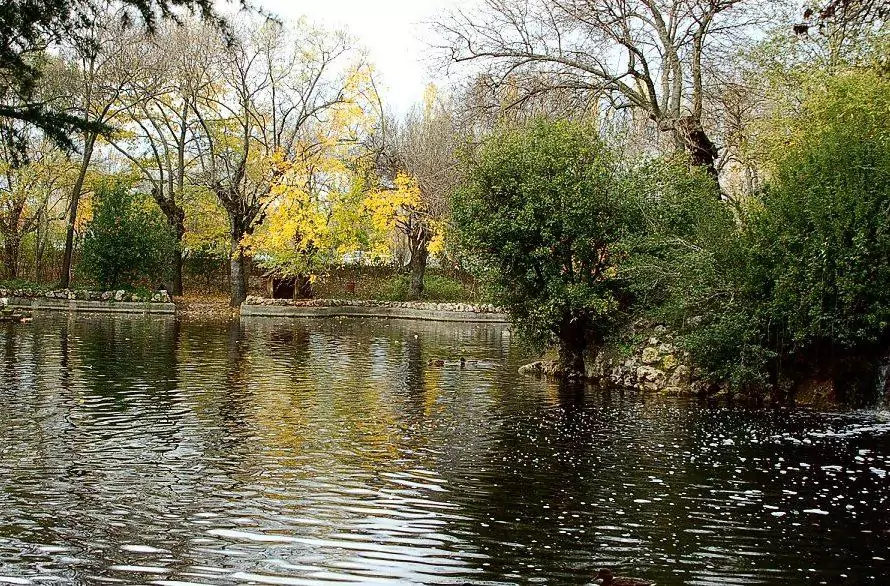
El Capricho Garden
photography by: ESPARTOSA
Ravaged the country and costing the lives of roughly one million people, the Spanish civil war between 1936 to 1939 is still a controversial issue in today’s Spain. This armed conflict, followed by 40 years of dictatorship, left many scars on the Spanish society, some of which yet to be healed.
The 80 years passed since the war ended pretty much expunged most physical evidences of that era, albeit few relics have survived, most notably the numerous bunkers used by the belligerent sides for command and shelter.
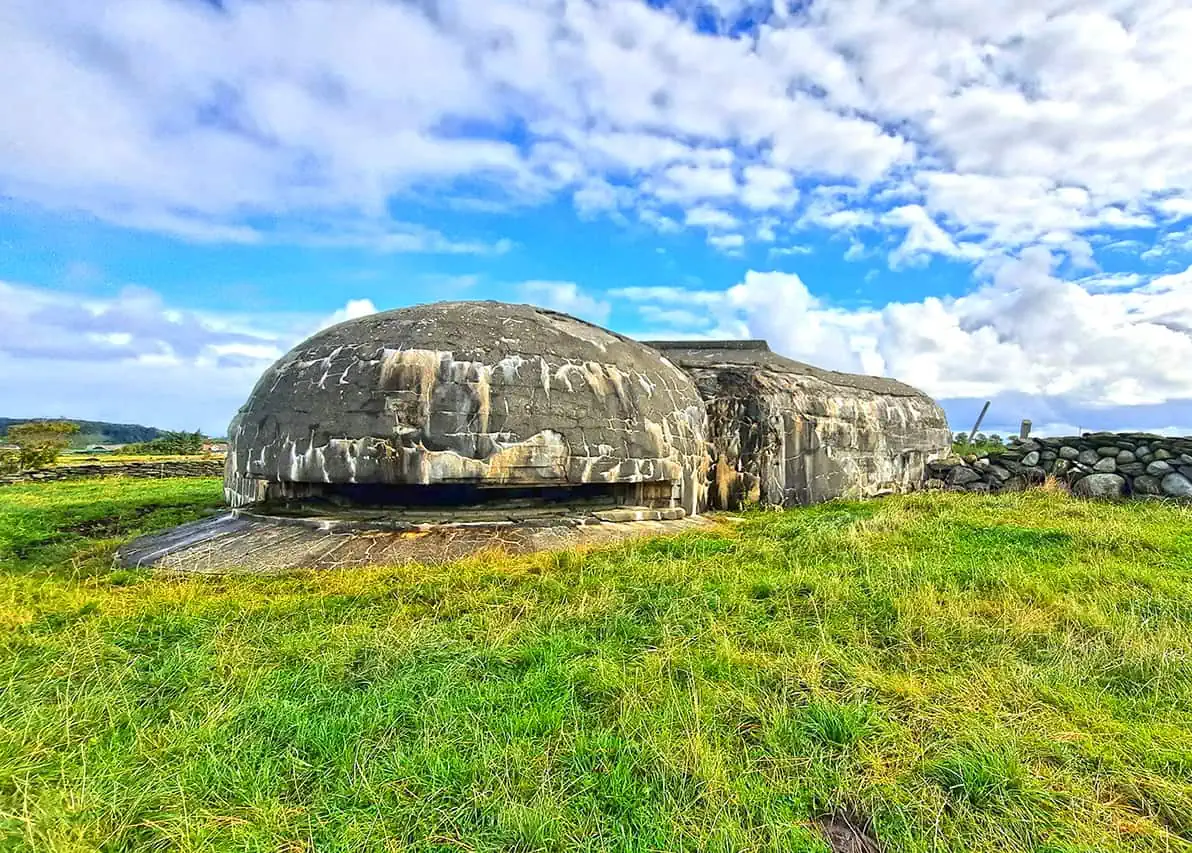
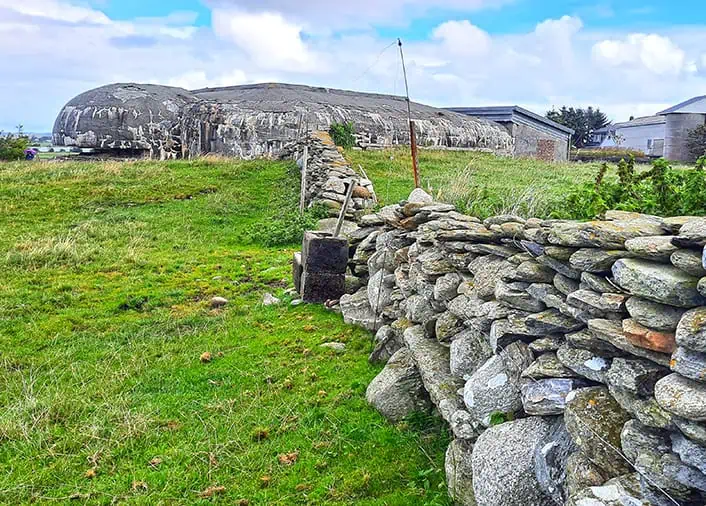
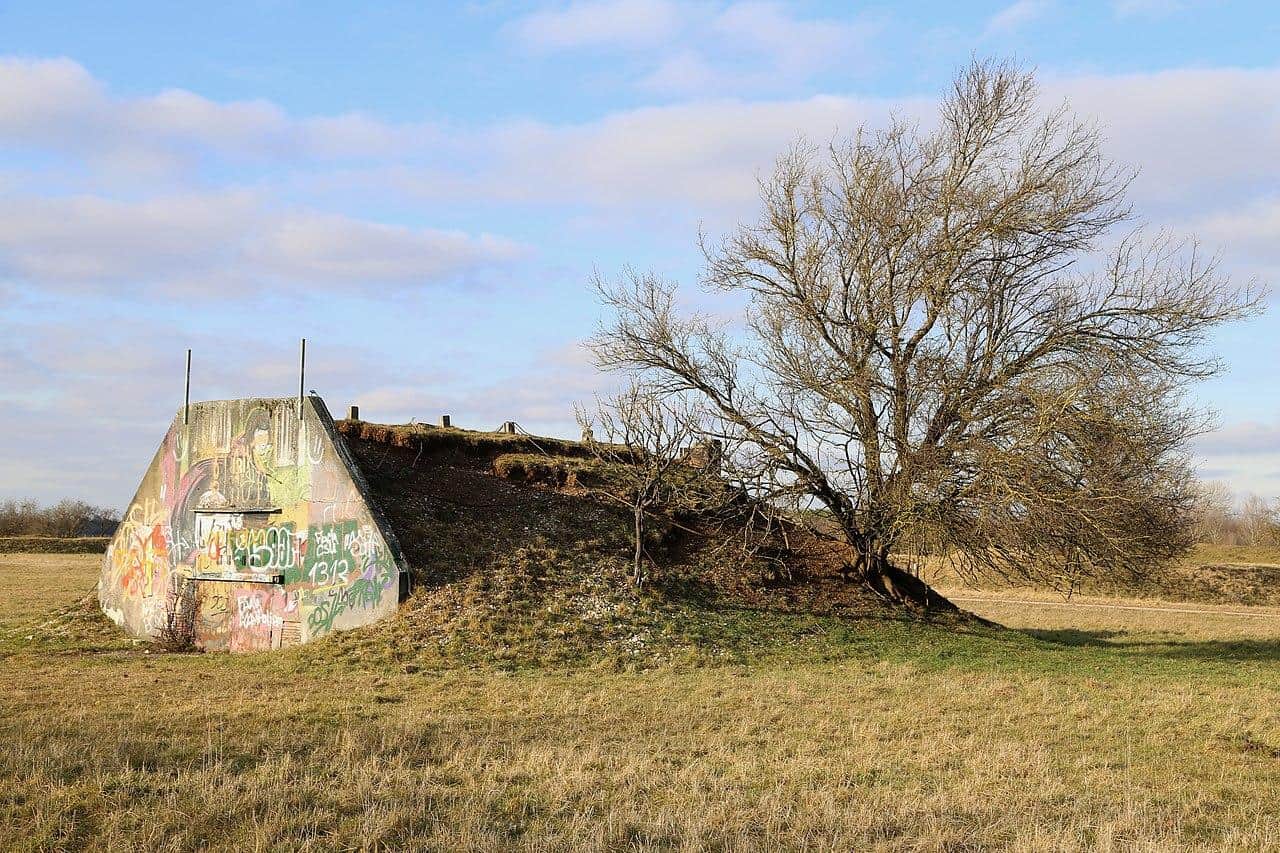
Since Madrid was under siege by General Franco’s forces, many bunkers were constructed as part of the military effort to hold back the Nationalist troops, one of which is the aforementioned bunker in El Capricho garden, hosting high ranking officers during bombings while having a capacity of 200 people. Additionally, a cluster of three bunkers, slightly jutting off the ground, can be seen at Parque del Oeste, as it was the ground zero of the Battle of Ciudad Universitaria between the Republican and Nationalist forces. Those fearsome concrete structures might not have much of an aesthetic merit, yet their historic context makes them culturally indispensable and beautifully intimidating.
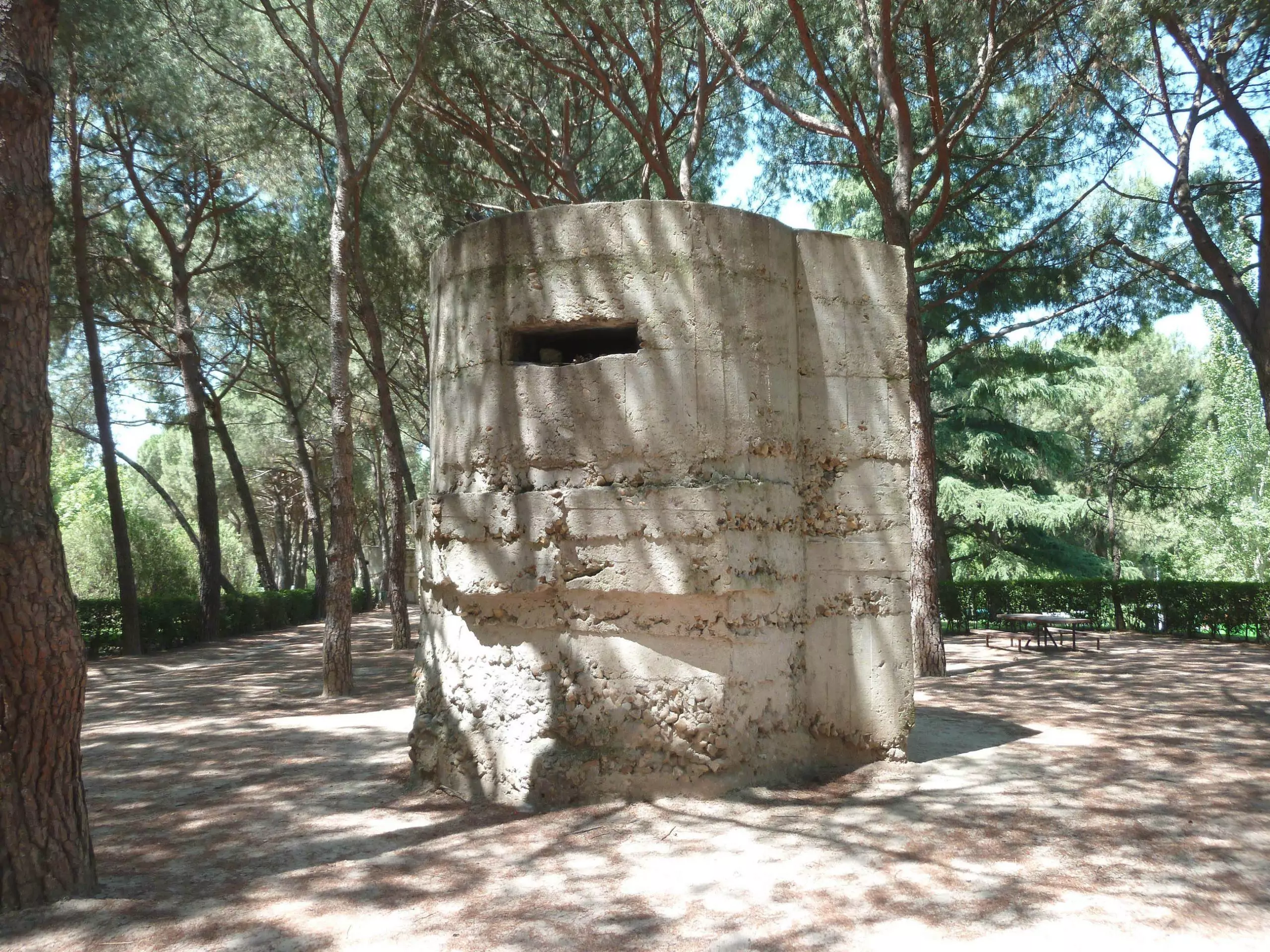
The bunker at Parque del Oeste
photography by: Contando Estrelas
Tucked away in the far southwestern part of Madrid, FIO is an acronym, standing for Fundación Infante de Orleans, a non-profit organization aimed at preserving Spain aeronautical heritage.
FIO operates at Cuatro Vientos Airport, the oldest airport in Spain, currently used as a base for aviation clubs and training facilities.
On the first Sunday of each month, FIO hosts an outdoor exhibition of small aircrafts, interestingly, most showcased planes are still in use, accompanied by the pilots themselves, ready to answer any questions from visitors and engage in conversation about their professional practices.
The eventful day culminates between 1PM to 2PM, when an airshow consisting of light airplanes performing spectacular air maneuvers, leaves everyone in the crowd jaw dropped.

The FIO Madrid’s airshow
photography by: José A. Montes