
The birthplace of the modern skyscraper, Chicago is globally renowned for so many things, whether it’s the iconic marina city complex, “Chicago Bulls” basketball team or simply being the hometown of former US president Barack Obama, the city captures our imagination as an urban alternative to NYC. Given everything the city has to offer, it attracts millions of visitors annually, domestic and international alike, swarming the myriad architectural wonders and world-class museums. Thus, it might come as a surprise but despite its popularity, Chicago still has some interesting places where tourists rarely visit, providing a getaway for the ones of you who wish to avoid over-touristy sites at some point.

By: Claudia Engelbracht
Date: 21:03 02.11.20
Last Update: 00:40 22.09.22
The dusty industrial strip along the Calumet River is home to one of Chicago’s biggest mysteries, the C.T.C No.1, an abandoned maritime vessel lying idle for years.
For occasional passersby this peculiar sight might seem ambiguous, but in fact it holds a much deeper reflection of the city historic development over the course of the 20th century.
During WW2, when the United-States was embroiled in trans-Atlantic conflicts, the need for raw materials was at its peak, as armored vehicles, aircrafts and ships were needed at the battlefront.
Originally named McIntyre, the 190 meter long ship was built in 1943 in an aim to transport iron ore mined in the Adirondack Mountains through the great lakes to be processed into weaponry as part of the military efforts to defeat the Axis powers.
Following the war, the ship was utilized for the promising steel industry, boosted by the opening of the Saint Lawrence Seaway, a network of canals and waterways connecting the great lakes with the Atlantic Ocean.
However, its new role was cut short by the declining of the steel industry, when a fatal collision into a bridge in 1974 sealed it fate altogether, causing its owner to sell it to the Cement Transit Co., serving as the acronym for its current name. Just until a decade ago the carrier was used to store cement, yet since 2009 it docks unused, as the cost of towing it was too high to justify its removal.
Update: Recently it was decided that the ghost ship will finally be evacuated and scrapped to make room for the port’s redevelopment, yet as for 2020, it’s still unconfirmed whether it actually happened. Even if you read this article afterwards, I would argue that a journey to Lake Calumet still worth the trouble, after all, it’s a rare opportunity to explore Chicago’s dystopian industrial landscape merging with its original natural surroundings.
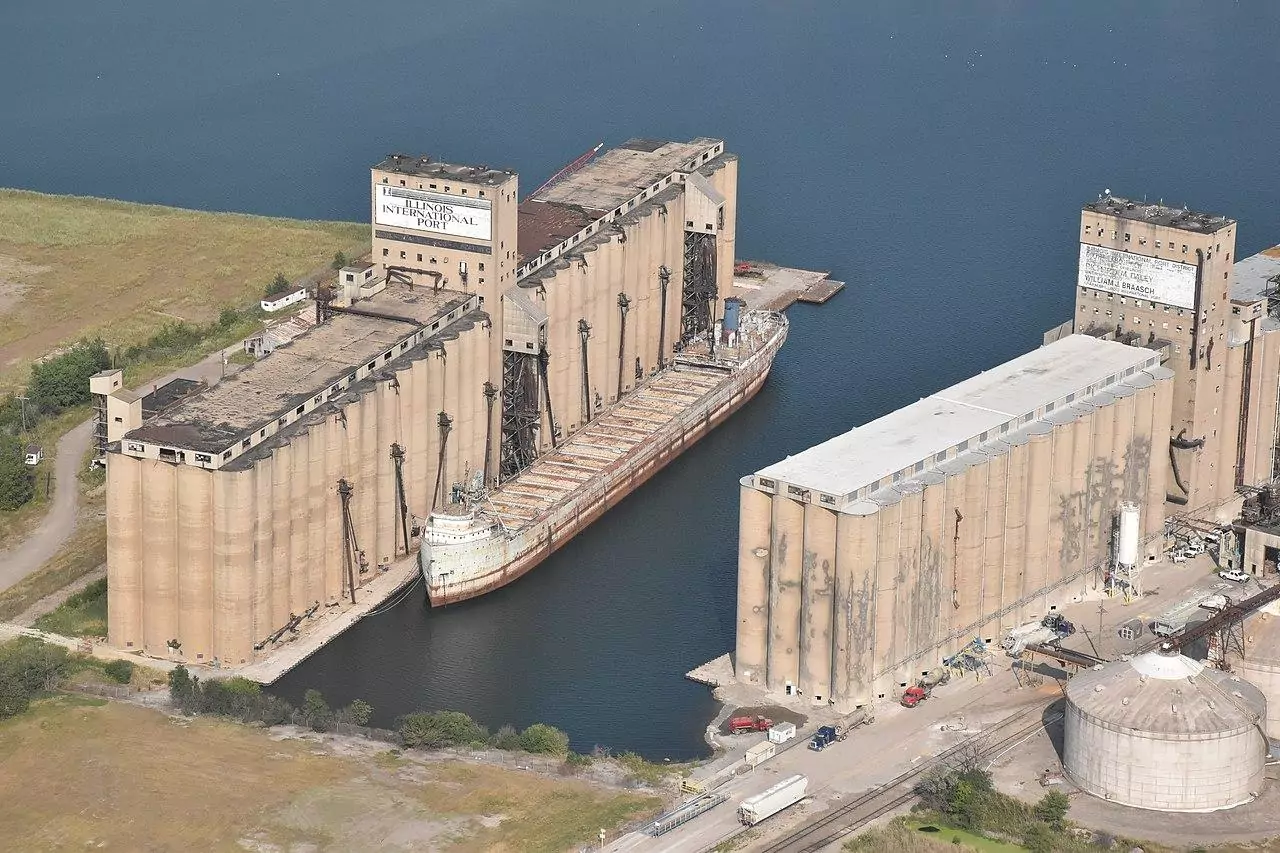
The abandoned C.T.C No.1 docking in the port
photography by: BartShore
We often think of neighborhoods surrounding the downtowns of typical American cities as the epicenter of global shopping-mall culture, where enclosed facility offers a somewhat sterile shopping experience, nevertheless, Chicago partly defies this notion by a chain of three semi-outdoor flea markets called “Swap-O-Rama”, of which the largest one is located at Ashland Avenue.
With over 1,000 vendors, everything you can possibly imagine is potentially on sale here, whether it’s a vintage item or just cheap imported merchandise, forming an endless mosaic of colors, shapes and sizes.
While the bulk of the market is dedicated to second hand goods or low-cost stuff, there is also a barber shop, an indoor food court and a farmers market, where local small-scale producers sell organic products, most notably cheese makers who offer free samples and the bakery stands, flocked by dozens of hungry shoppers looking to gorge on scrumptious loaf cakes with corn, coconut and pineapple.
Despite being mostly accessible by cars, there are few buses which stop nearby, saving a lot of precious time allocated to find a free parking space. The admission fee is 2$ for adults, who are being stamped on their hands for re-entry.
Take note that the use of credit card throughout the market is limited, thus, make sure you bring a sufficient amount of cash. Additionally, some stands don’t have fixed prices so be prepared to bargain if you want to get more for less.

Constructed in 1848, the Illinois and Michigan Canal connected the Mississippi River with the great lakes via Chicago, consequently transforming the city to a national and global commercial center, which ultimately developed into the modern-day metropolis we all know. Throughout the 20th century, the banks around the canal became dominated by large factories, making it an ex-territory when it came to any kind of recreational activity.
In an attempt to revive the area and make it a bit more attractive, the municipality of Chicago converted a narrow strip of land along the canal into an urban park in 2000, slightly contrasting the industrial landscape with a pristine piece of nature.
Featuring walking trails, sitting areas with benches and fishing platforms, the park intriguingly incorporates a pastoral vibe alongside a semi-dystopian cityscape of large warehouses and manufactories, while the iconic skyline of Chicago jutting out at the horizon.
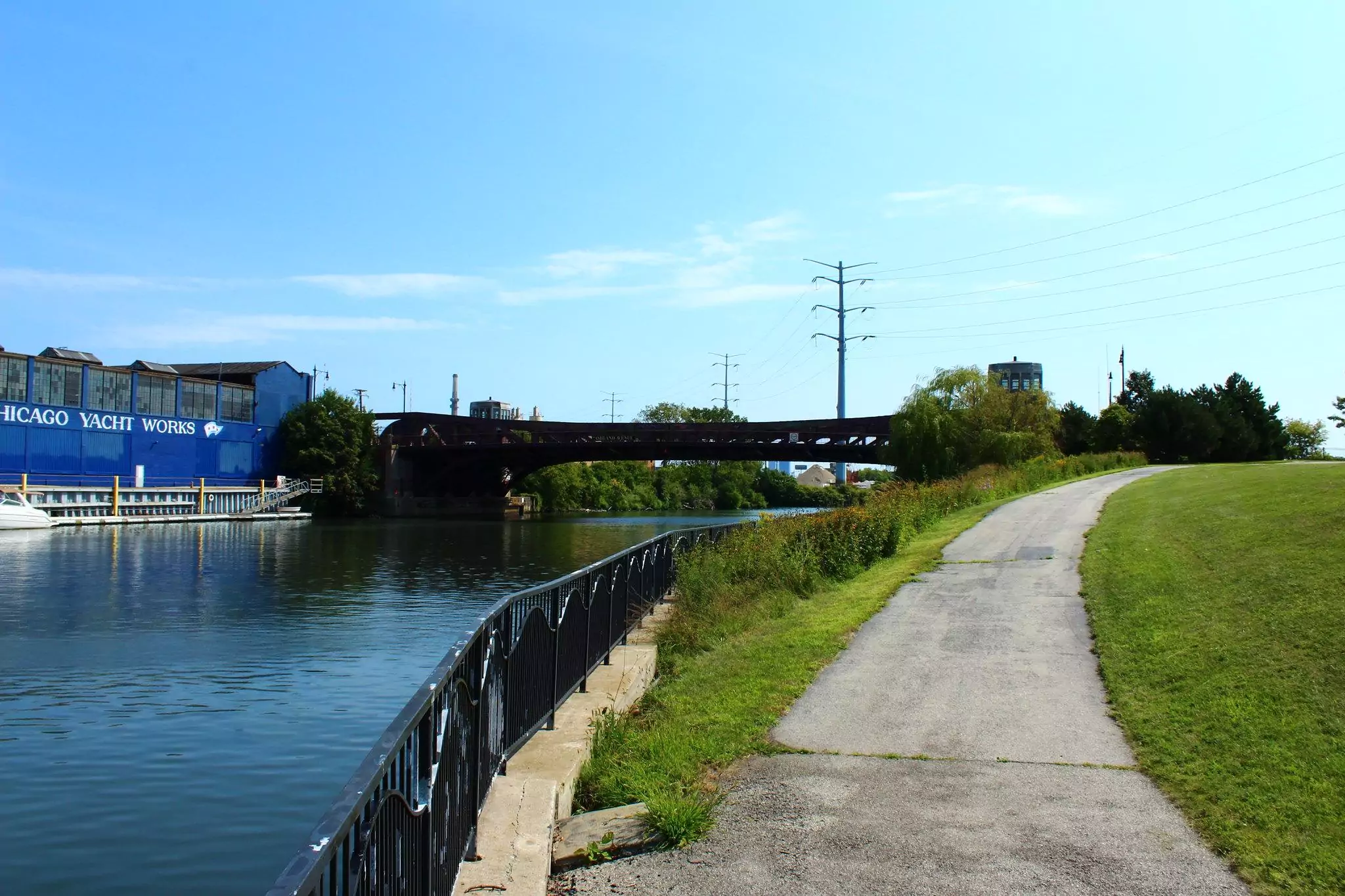
Ashland Avenue Bridge as it seen from the Riverwalk Park
photography by: Richard Bartlaga
If you decide to visit the park, the thrill seekers among you might also be interested in exploring the nearby Damen Silos. Built in 1906 as the Sante-Fe Grain Elevator, the storehouse prospered for decades due to Chicago’s aforementioned strategic location, yet in 1977 the grain storage facility abruptly ceased all operations following a large explosion, leaving the structure abandoned ever since. Interestingly, in recent years the dilapidated silos became a pilgrimage site for urban explorers and graffiti artists, rendering it as an alternative tourist attraction.
Visiting the site requires extra caution, especially when entering the underground tunnels beneath the silos or climbing your way upwards to the top, but if you’re brave and watchful, you’ll be rewarded with one of the most spectacular panoramic views of Chicago.
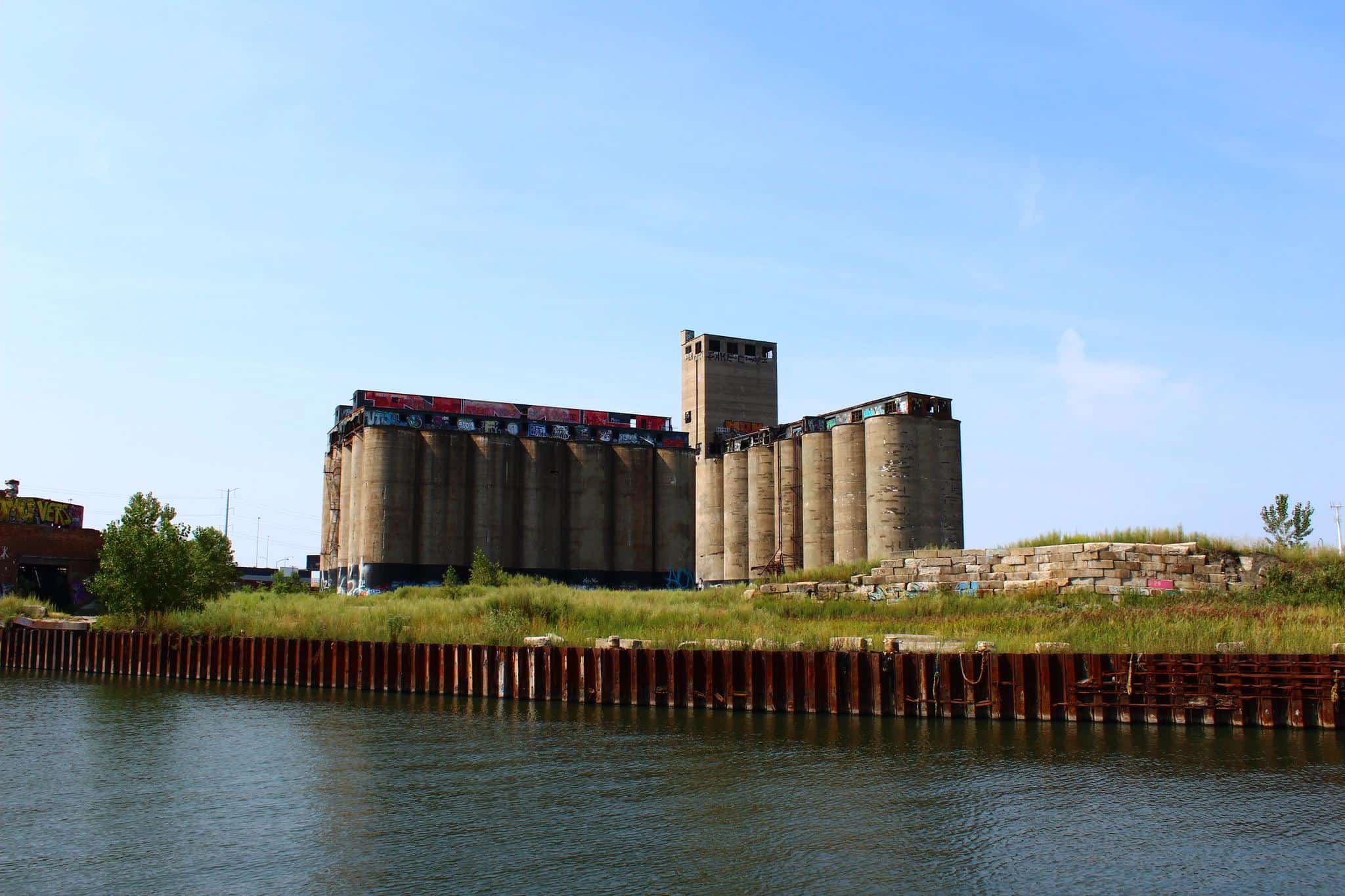
The Damen Silos
photography by: Richard Bartlaga
During WW2 more than 100,000 American Japanese who lived in the West-Coast were notoriously sent to concentration camps in extremely remote locations. As the fighting went on, many of them were facing the option of being released in exchange of relocating to the Midwest, consequently a large portion of people with Japanese ancestry migrated to Chicago.
Naturally, the tens of thousands of displaced American Japanese looked for a communal place to congregate, keen for a sense of belonging, ultimately establishing the Midwest Buddhist Temple in 1944. The community originally gathered at a public building in the south side of Chicago, moving to several other locations before permanently settled in the current temple in 1971.
Designed by a Japanese architect, the temple and its adjacent traditional garden look a lot like a piece of Japan in the middle of Chicago, resembling a typical Kamakura period structure.
Interestingly, the Buddhism sect of which the Midwest community adheres to is Jodo Shinshu, a school of Buddhism that encourages the spread of Buddha teaching among ordinary people and not keeping it solely for monks. Subsequently, the temple opens its gate for new members who aren’t of Japanese origin and guests alike, offering courses in Buddhism, traditional Japanese cooking and meditation.
The temple also holds traditional Japanese performances and festivals (timetable available here), most notably the Ginza Holiday and Bon-Odori festivals, giving visitors an opportunity to enjoy martial art dance and Taiko drumming, accompanied by delightful Japanese street food.
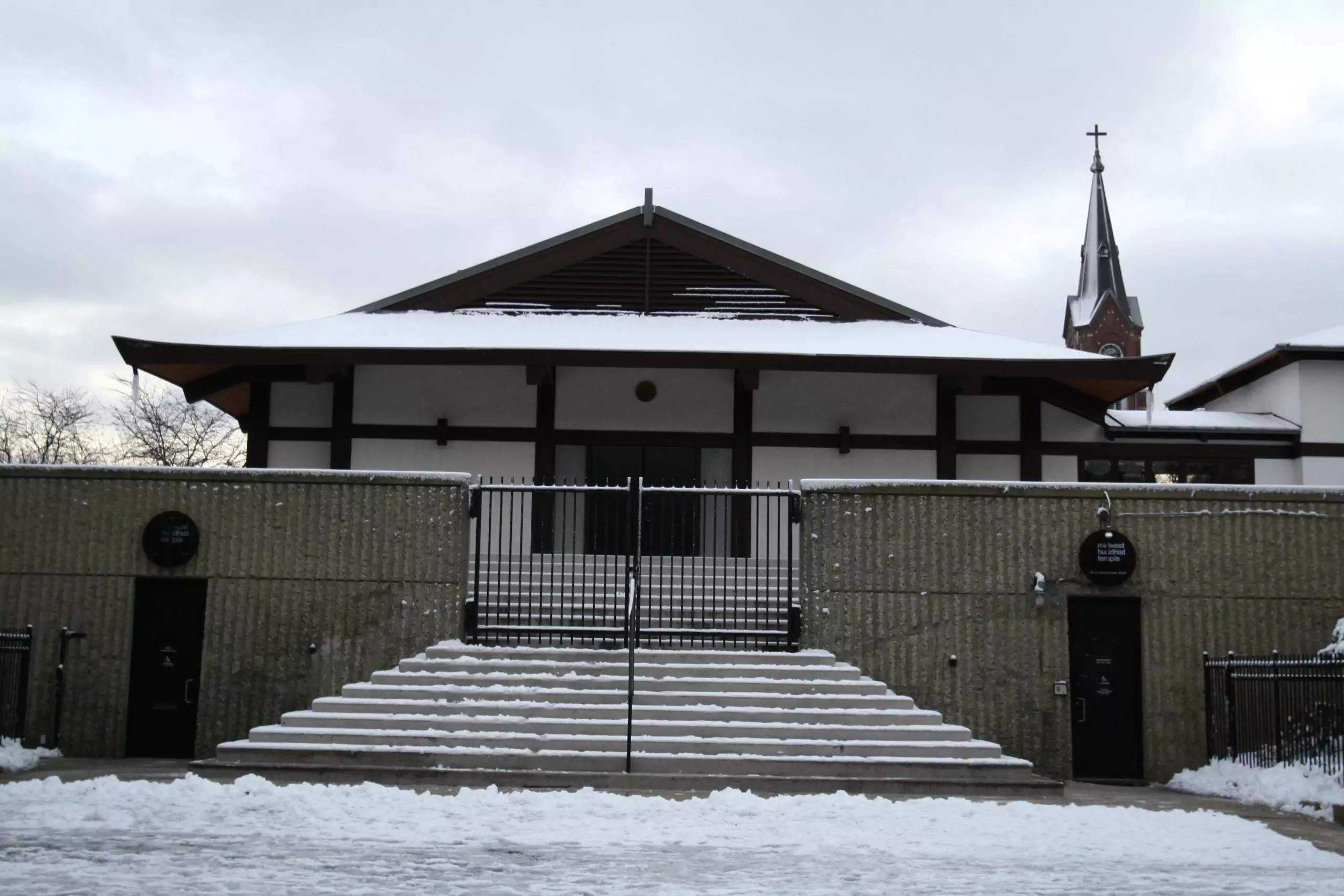
The façade of Midwest Buddhist Temple during winter-time
photography by: Alberto Aldana
Europe’s tremendous cultural wealth is a source of awe and inspiration all around the world, so much so, that numerous countries outside the old continent have complete replicas of European iconic landmarks, unexpectedly, one of which is the leaning tower of Niles, a village northwest of Chicago’s municipal borders.
During the mid-1930’s, the entrepreneur Robert Ilg and the owner of Chicago’s Hot Air Electric Ventilating Company ordered the construction of a recreational park for his workers. One of the park’s major attractions was the swimming pool, entailing a large water tank, which according to Robert was visually unattractive, therefore in an attempt to beautify this eye-sore, a replica of the Leaning Tower of Pisa was built around it.
Measuring 29 meters tall and 8.5 meters wide, the tower is roughly half the size of the original one, while also leaning less sharply, nevertheless, I would argue that it’s still good enough for recreating the insanely popular and illusional photo of holding the tower with your hands.
The tower contains several bells, three of which were cast in Italy centuries ago, literally linking this quaint monument to its inspirational motherland.
Interestingly, the base of structure has a memorial plate in honor of Galileo Galilei, the renowned 17th century Italian astronomer, who threw several articles of different sizes from the Leaning Tower of Pisa, validating his theory of gravity.
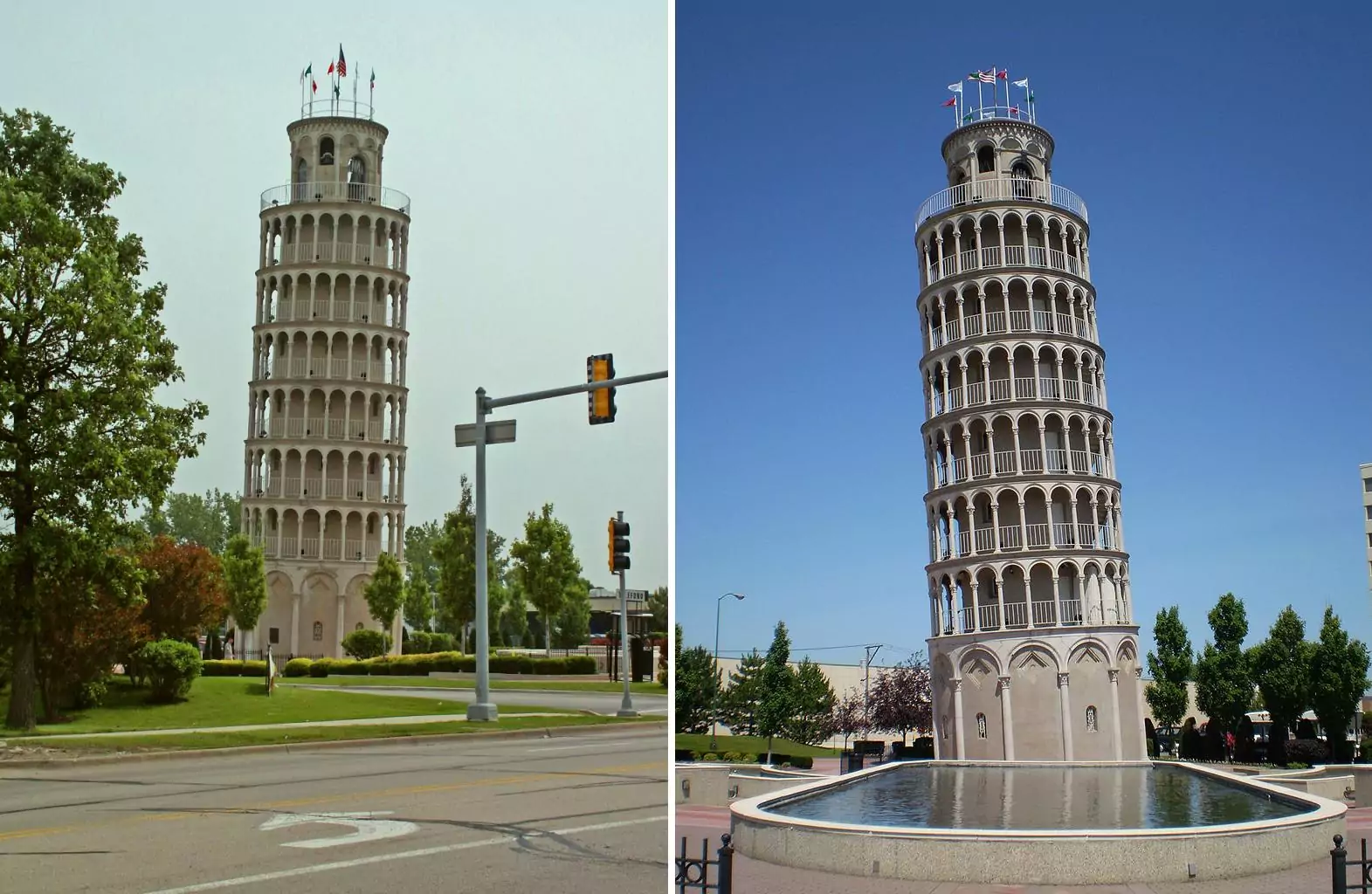
The Leaning Tower of Niles
photography by: Ranierotazzi and Miroslaw Mucha
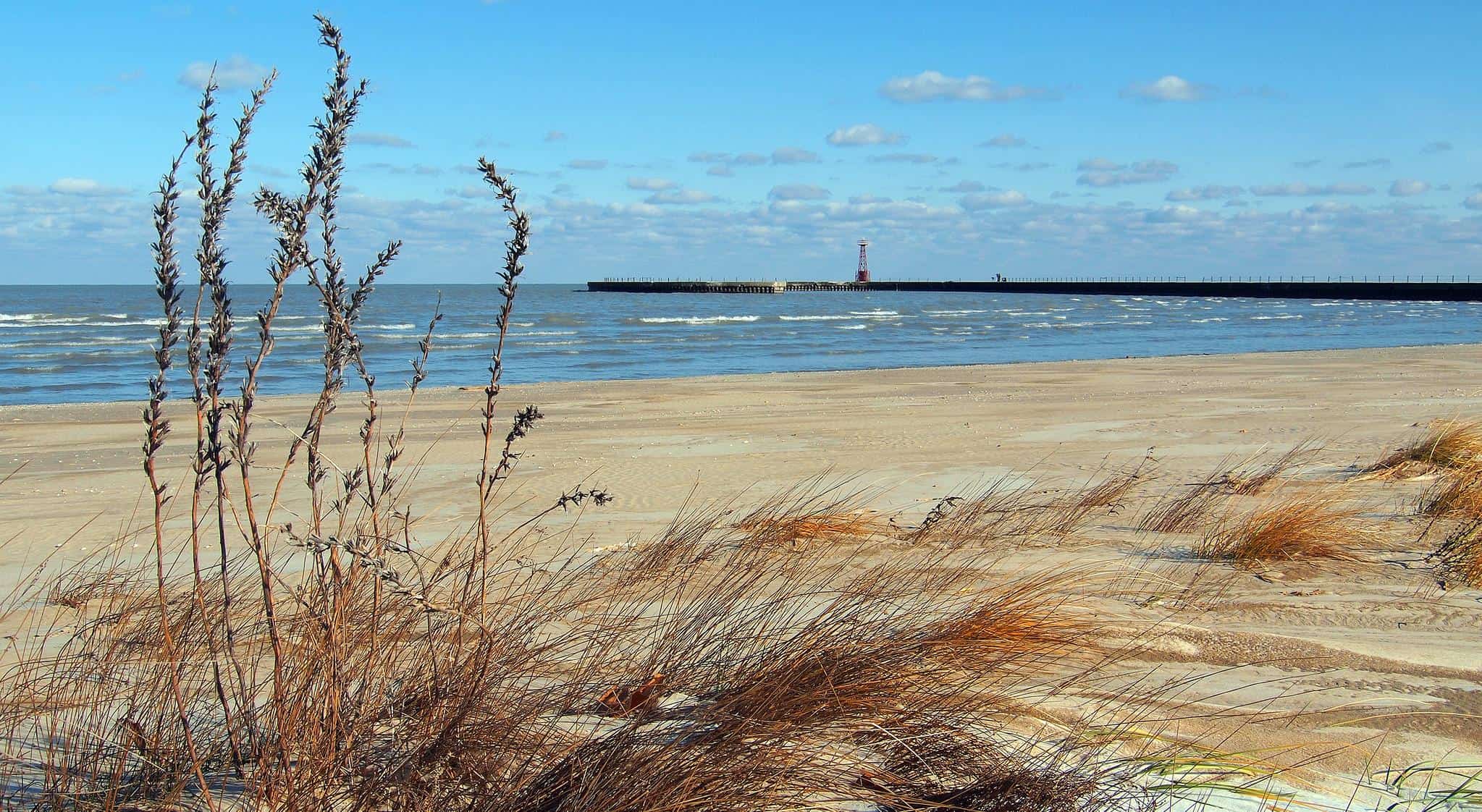
Nestled along Lake Michigan, Chicago is bestowed with plenty of beaches, yet most of them tend to be pretty crowded during the warm season, particularly those in proximity to the downtown.
Formerly a landfill area, Montrose Beach on the northeast part of the city serves as a much calmer alternative to the chockfull lakeshore more southwards, as its wide and spacious sandy strip has enough room for a multi-participant frisbee game even during the 4th of July, let alone in a mundane weekday.
In stark contrast to its smelly past as a garbage dumping site, the nowadays beach is clean and well-kept, offering sport facilities, plenty of free parking and even a designated beach for dogs.
While the beach is one of the best places to have an afternoon picnic in front of Chicago’s looming skyline, Montrose has its own food scene, including a couple of restaurants and concession stands, most notably a Mexican vendor selling treats like Mexican-style fruit cups and corn on the cob.
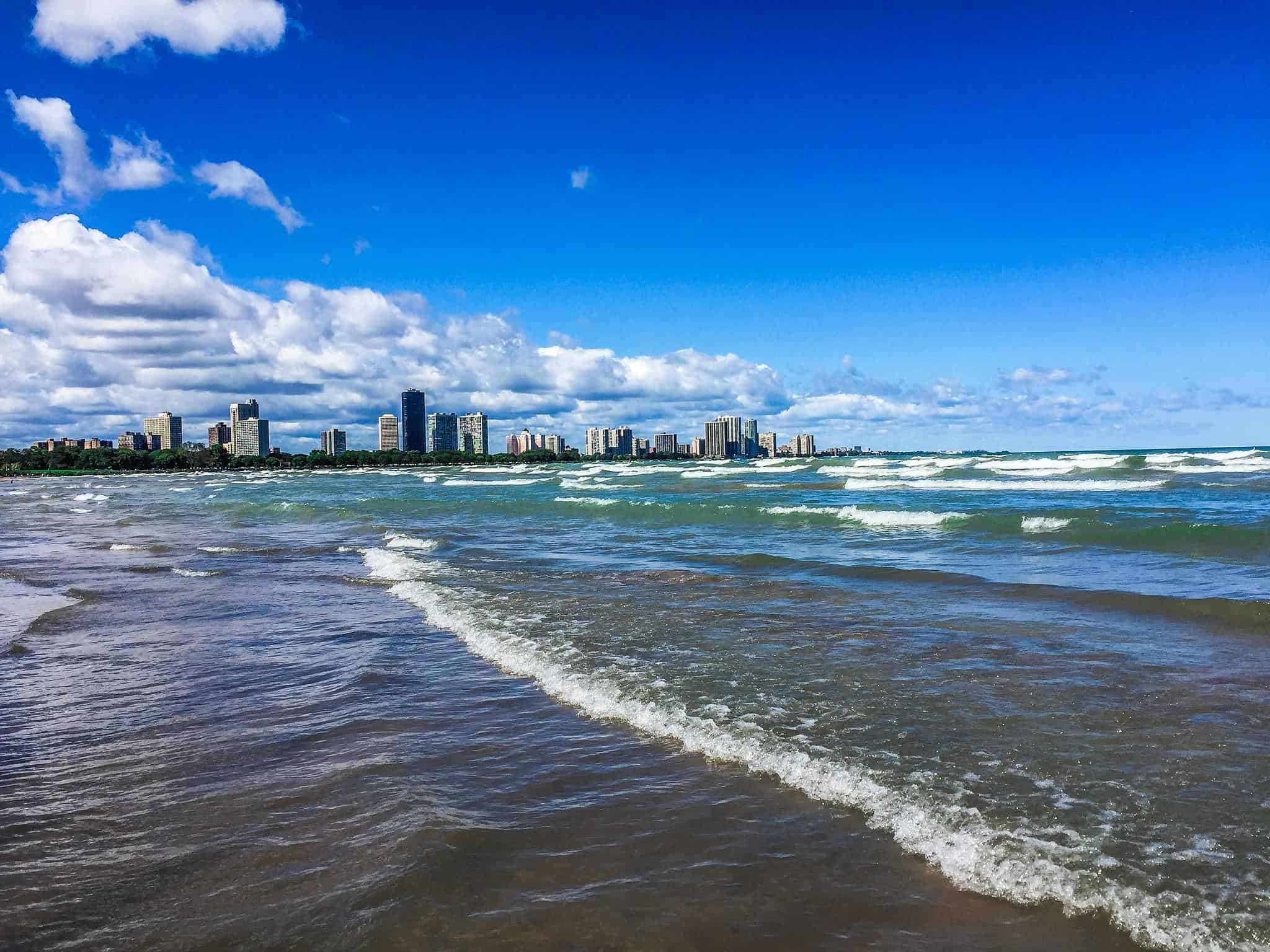
Montrose Beach on the backdrop of Chicago’s skyline
photography by: spablab
Bordering the beach is the 15-acre Montrose bird sanctuary, home to more than 300 species of birds, including rare and endangered ones. From the 1950’s until two decades later, the now sanctuary was a military base, whose chief opted to conceal it by planting shrubs of honeysuckles around. Following the barrack’s evacuation, the shrubs and more recently planted trees became the habitat of numerous migratory birds, branding it as the Magic Hedge.
Swarmed by bird-lovers, the magical thicket is teeming with birds all year round, albeit during spring and autumn it culminates in a large-scale orchestra of song-birds, not to be missed.

A yellow warbler perching on a small branch in Montrose bird sanctuary
photography by: synspectrum
Dominated by skyscrapers standing hundreds of meters tall, Chicago’s downtown might feel a bit claustrophobic after a couple of days, triggering an urge for a glimpse of nature.
At a roughly 30-minute drive from the city center, the Waterfall Glen Forest Preserve, south of Darien, is the perfect place to escape Chicago’s hustle and bustle, as it offers a mind-boggling array of different landscapes, ranging from a thick forest to open meadows.
The preserve is traversed by a 15 Km main trail, meandering around the Argonne National Laboratory, making it possible for hikers, cyclists and even horseback riders to entirely cross it.
Home to 740 species of plants and 600 animal species, it’s one of the most ecologically significant reserves in the state, divided into three main segments – a dense oak-maple woodland covering most of the area, the Bluff Savanna, stretching southwards all the way to Des Plaines River, brimming with hundreds of distinct plants, including dozens of endangered species and some of Illinois’s oldest black walnuts, while the Poverty Prairie, named after the poverty oat grass, endemic to the region, is a grassy patch of land, sparsely punctuated by trees, which every spring-time becomes the epicenter of the New-England asters purple bloom.
The forest preserve has two waterfalls, the first of which, Rocky Glen, was artificially built as a dam in the 1930’s by the civilian conservation corps and easily accessible by foot, whereas the second one is secluded, as its exact location is publicly undisclosed due to conservation concerns.
By that point you probably assume that this pristine natural gem is named after one of the waterfalls or both, yet you’ll be overwhelmingly shocked to discover that it’s actually named after a man coincidentally called Seymour “Bud” Waterfall, who was the president of the forest preserve district for 26 years.
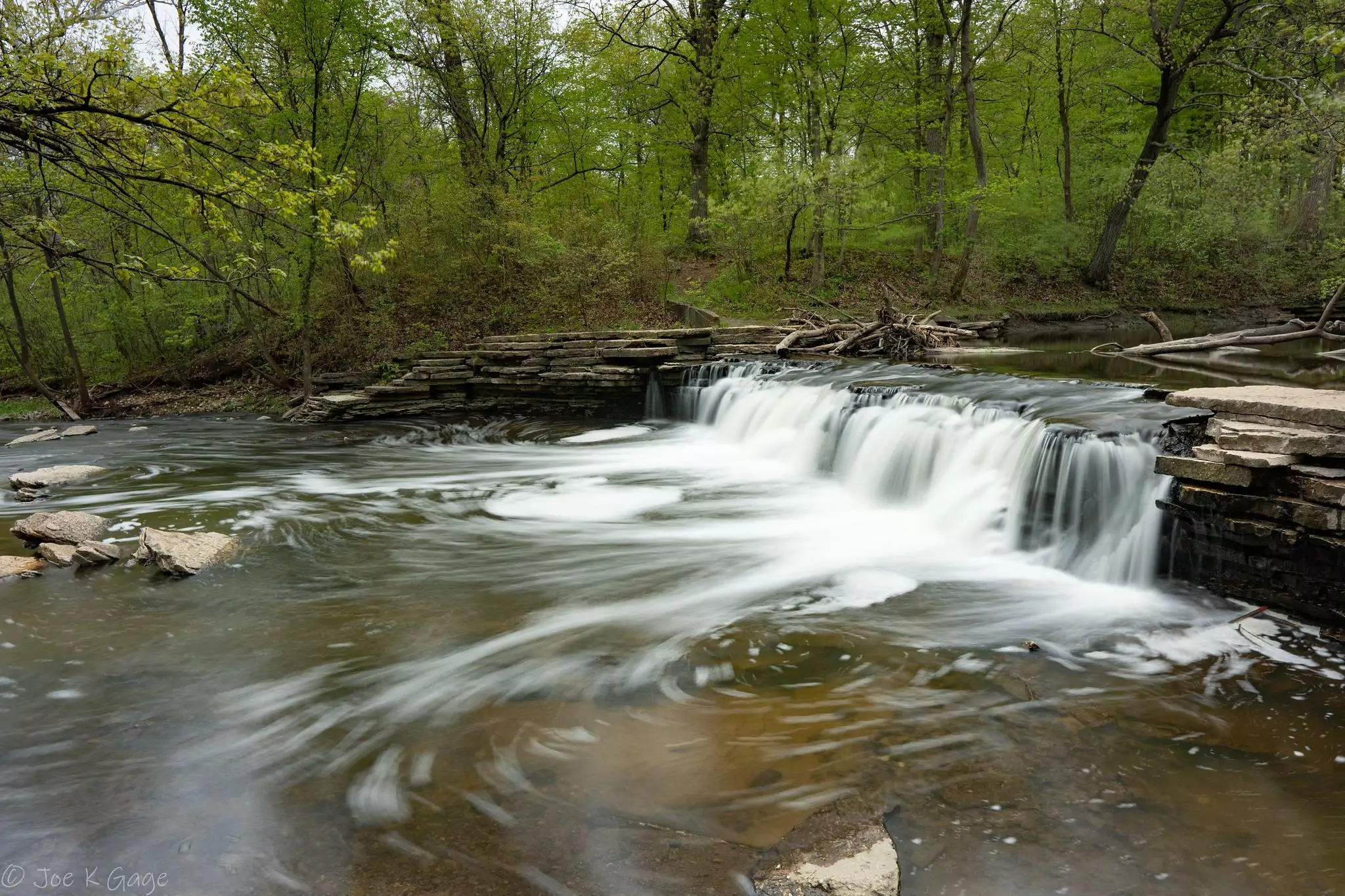
The Rocky Glen Waterfall
photography by: Joseph Gage
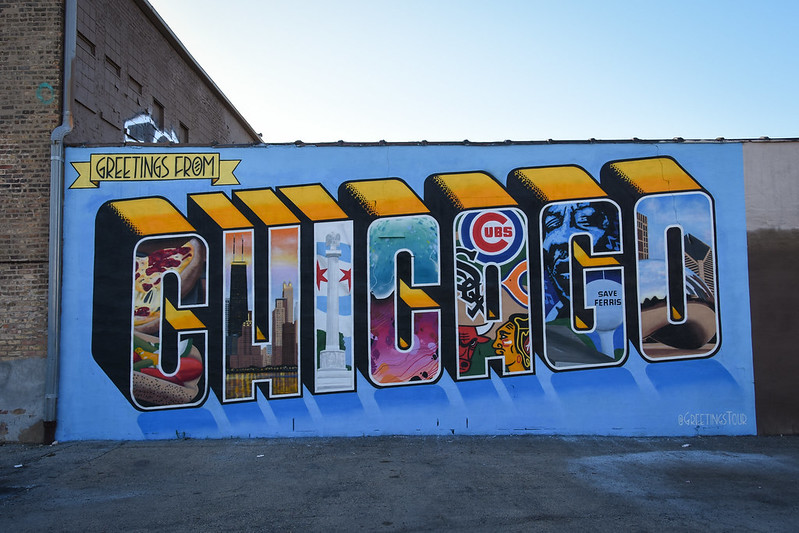
Following the advent of the automobile and its mass production during the early 20th century, middle-class Americans discovered the concept of traveling across states, driving through the newly constructed network of highways. In the Smartphoneless era, the only way of sharing travel experiences and insights was to send postcards, giving rise to the once exceedingly popular “Greetings From” Linel postcards, depicting countless cities and towns all over the country by embossed 3d text, containing drawings of famous landmarks and icons related with those places.
Inspired by the classic postcards, the New York based graffiti artist Victor Ving and the studio photographer Lisa Beggs went on a journey across the US, remaking the “Greeting From” postcards as murals, attempting to complete as many paintings as possible.
In May 2015, it took the talented pair just four days to complete the “Greetings from Chicago” Mural in Logan square, tucked between Prindiville Street and Milwaukee Avenue, prompting a frenzy street art epidemic all over the neighborhood.
Assisted by the local artist, Amuse 126, Victor and Lisa made the mural by using almost exclusively spray paint, including the intricate details like the downtown skyline in the “H” letter and the city’s sport clubs logos on “A”.
Daily flocked by dozens of local Instagrammers hungry for Likes, the mural is both nostalgic and contemporary at the same time, leaving visitors with an exceptional online souvenir.