
The southernmost province of Japan, the archipelago of Okinawa is famous for its gorgeous beaches, lush rain-forest and incredible coral reef, yet it's also a formerly independent region with a completely distinct culture, where the local people are extremely proud of their historical heritage. There is no sphere where its unique identity is more present than its exceptional cuisine, providing visitors with plenty of exotic delicacies, one of which is the Okinawan ice-cream, known for its exclusive creamy flavors, surprisingly addictive even for the biggest skeptics out there. While the most popular ice-cream parlor is by far the local chain of Blue-Seal, Naha’s main street is brimming with smaller options as well.

By: Omri Westmark
Date: 16:47 25.07.20
Last Update: 12:16 24.04.21
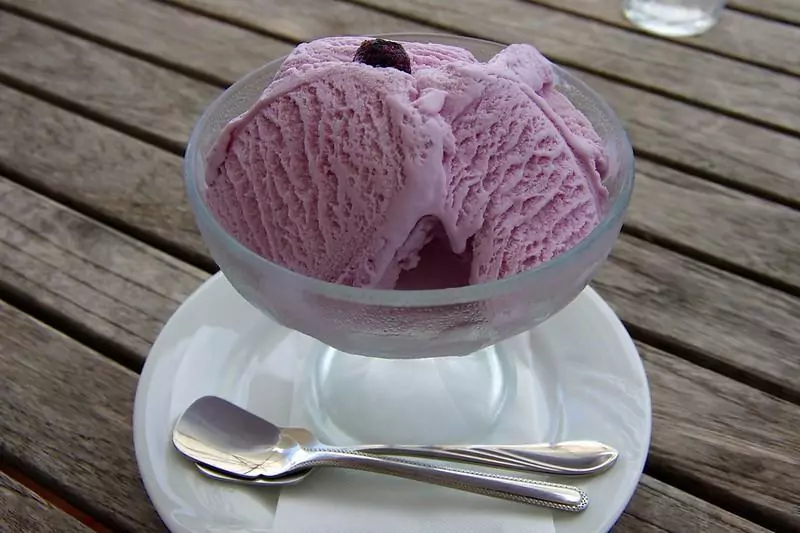
There’s probably no staple food more synonymous with Okinawa than its purple sweet potato, locally known as Beni-Imo, its widespread use as a popular ingredient ranges from a rice substitute at a bento-box to plethora of sweet treats, most notably the famous Beni-Imo ice-cream, found virtually anywhere, as an industrial Haagen Dazs mini-box but also as a homemade gelato at one of the local ice-cream parlors. When compared to the more common type of sweet potatoes, Beni-Imo has a smoother texture and a slight sweetness, making it ideal as an ice-cream flavor.
Additionally, the purple sweet potato is considered as a superfood due to the high concentration of vitamins and anti-oxidants, attributed by some as the main factor behind the exceptionally high longevity among Okinawans, thereby serving as the perfect conscience cleaner for whoever opts to feel guilty after gorging this heavenly dessert.
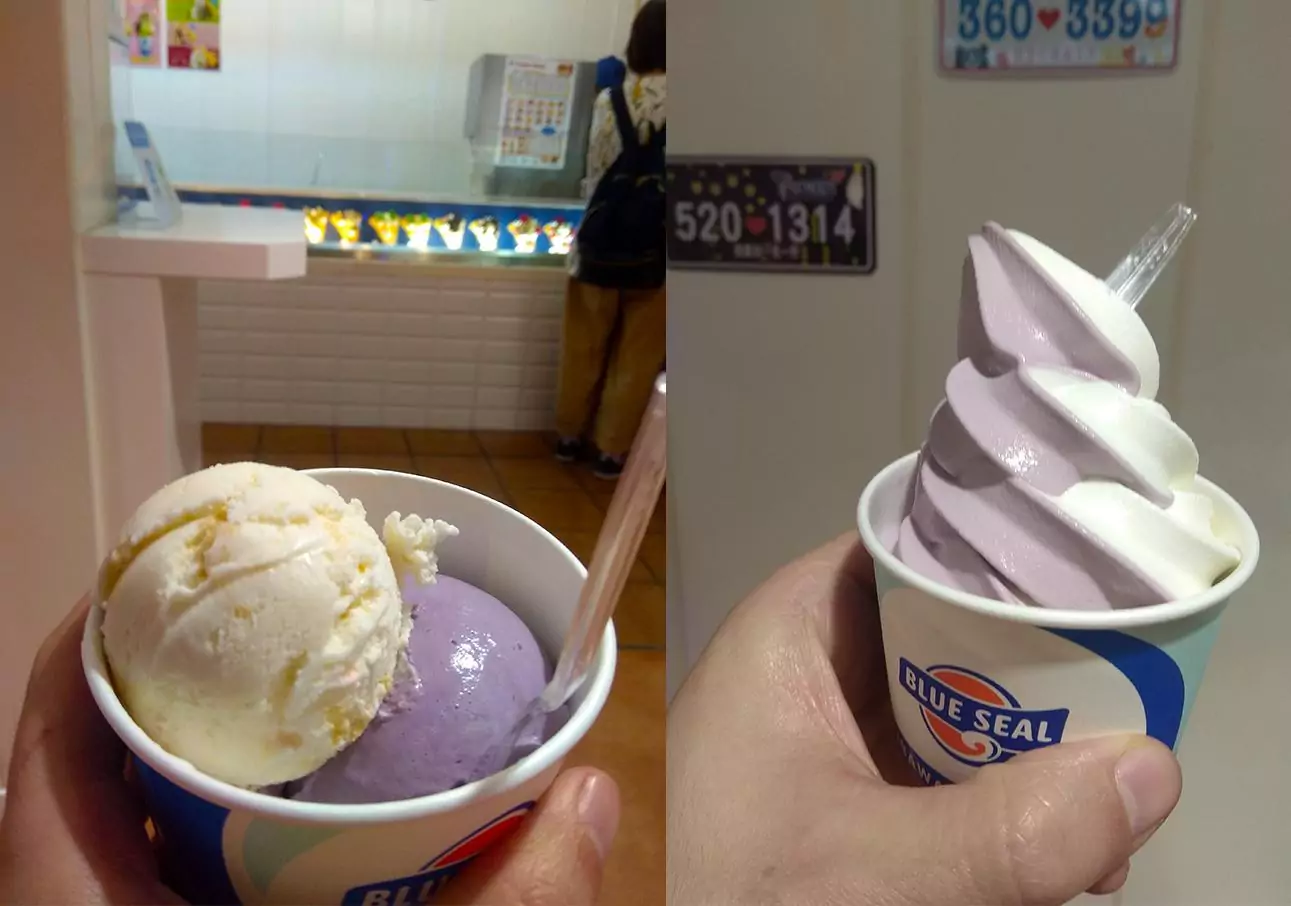
Beni-imo icream alongside a milk flavored scoop
photography by: Omri Westmark
We often view sugar merely as a supplement for sweetening beverages and desserts, yet what if I told you that Okinawans regard it as much more than simply an additive? Well, in fact the local sugar cane agricultural output is pretty significant, evident by the numerous crop fields scattered around the archipelago’s rural parts.
The canes-based Okinawan brown sugar has a distinct aroma, slightly reminiscent of molasses, and is widely incorporated in many local sweets, fashionable bubble-tea drinks and even some savory bites, therefore, it won’t come as a surprise that sugar-cane is also a popular ice-cream flavor, and unlike its title, it’s only mildly sweet, giving much room for deep earthy aromas to interact with your taste buds.
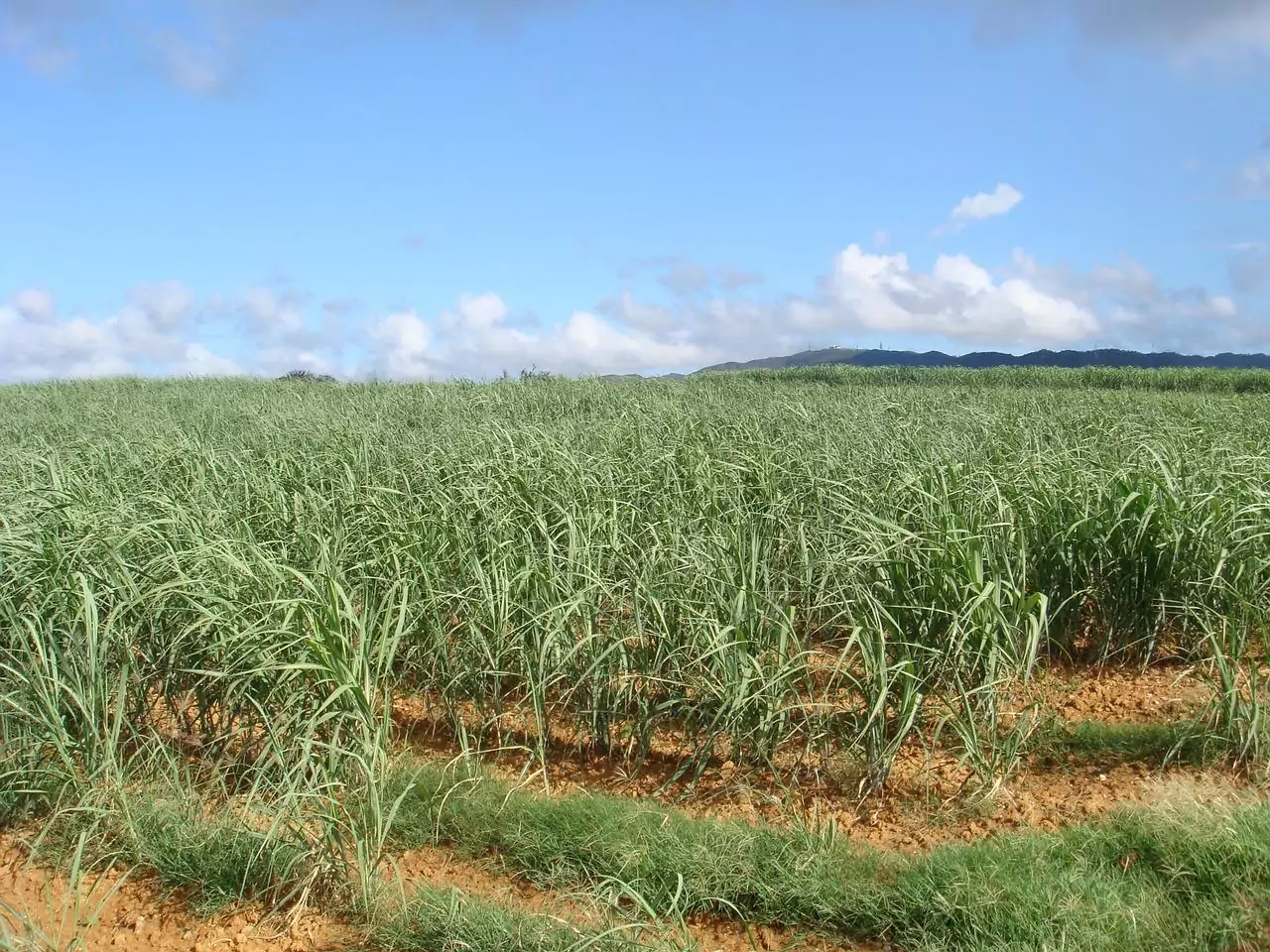
Sugar cane fields, Okinawa
photography by: snow_111
One of Okinawa’s most popular souvenirs, Chinsuko is the local version of short bread, made of flour mixed with lard, sugar and a pinch of salt, giving the cookie its distinct hybrid flavor. While it’s still not fully conclusive whether this treat originated from China, Portugal or combination of both, it became a luxury item among Ryukyu royal dynasty when the archipelago was an independent monarchy.
The modern-day salt-cookie is made solely with local ingredients, like the renowned Chatani salt, proudly offered to tourists as gifts in Naha’s endless array of souvenir shops, selling many surprising versions of Chinsuku, like the Matcha green-tea flavored cookie, Beni-Imo and even brown cane-sugar.
Even though the cookie itself is undoubtedly incredible treat by its own right, when mixed with local vanilla ice-cream it gets even better, contrasted by the creamy texture, the ice cream is both crunchy, savory, sweet and milky.
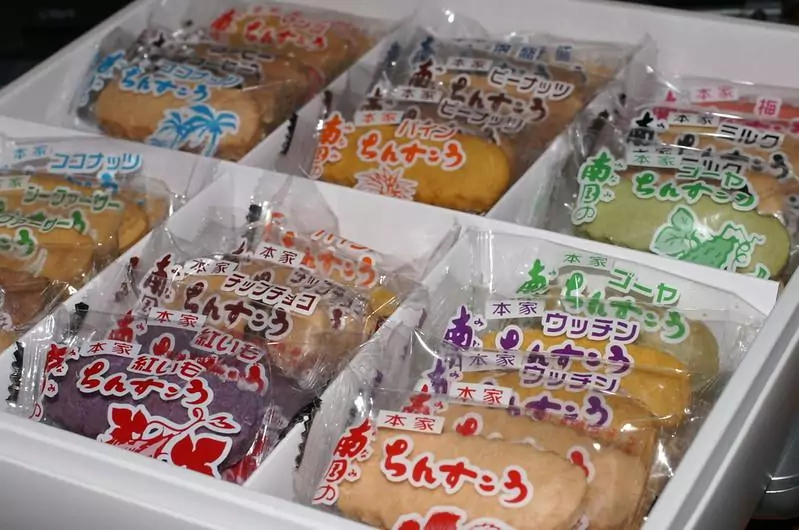
A souvenir box with various flavors of Chinsuko
photography by: ketou-daisuki
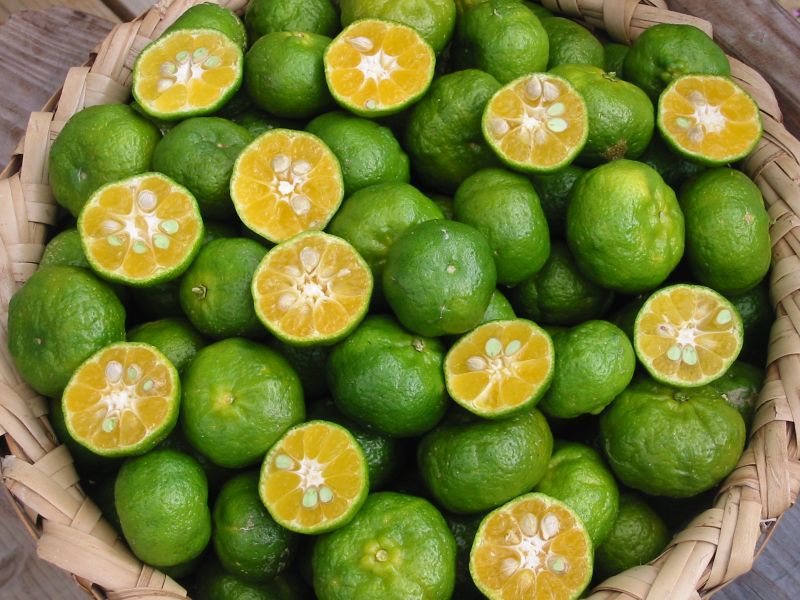
Native to the archipelago of Okinawa, the Shiiquasa is a local flat citrus, used an important ingredient in local cuisine, varying from a mere dish dressing to jams, juices and various types of desserts.
This lime-like citrus has a unique flavor of sourness accompanied by a slight bitter after-taste, somewhere between a lime and grapefruit.
Besides its exceptional and unfamiliar flavor, Shiiquasa peel is rich with synephrine, a chemical substance responsible for increase in metabolism, and tangeretin, a compound associated with anti-inflammatory processes, making it yet another Okinawan food item bestowed with plenty of health-benefits.
Shiiquasa is rarely mixed with a cream-based gelato, as it’s rather much more appealing as a sorbet or a sherbet, often best-suited when served as refreshing dessert after a heavy meal.
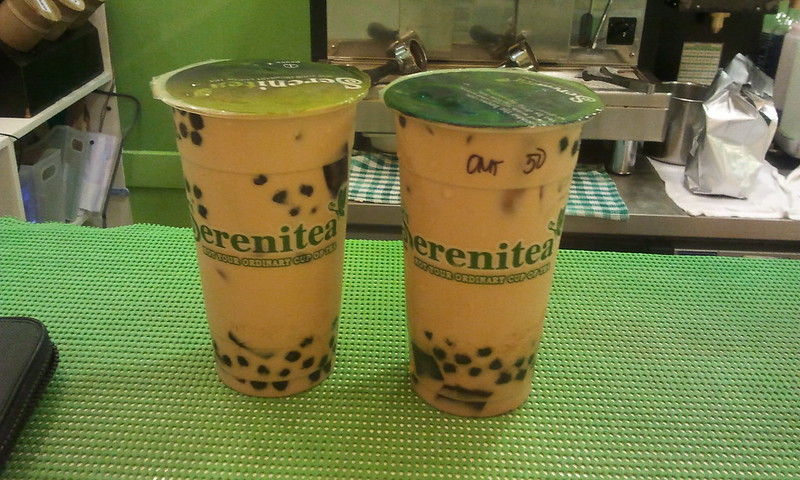
During the last decades Japan has developed a world renowned coffee culture, surpassing many prominent coffee superpowers, albeit inherently it’s still much a nation of tea as it’s by far the most popular drink, both hot and cold. Okinawa is no exception when it comes to beverage preferences, reflected in dozens of places across Kokusaidori Street in Naha, which specialize in exclusive bubble tea sipped by incessant swarms of enthusiastic customers.
While green tea is still the most widespread type, it’s the black tea of Nago, in northern Okinawa, that is considered as the crown jewel of the local tea scene. Mixed with milk and roasted brown sugar, it has a truly unique and deep flavor, unparalleled by any other milk tea.
As an ice-cream scoop, the Ryukyu Royal Milk Tea creamy gelato is delightful, fully encompassing the tea’s spectrum of fragrances, feeling as an authentic frozen version of the real thing.