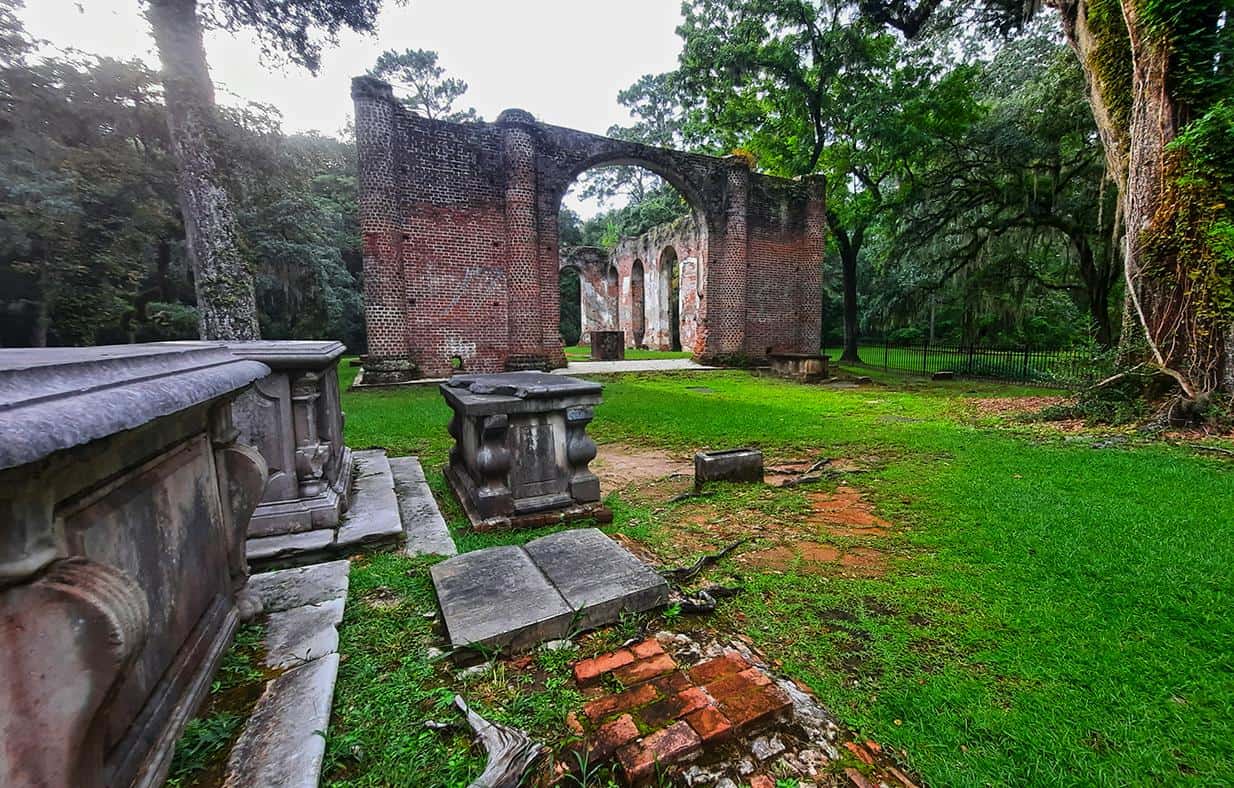

If the Sheldon Church in rural South Carolina was a human being, he would be considered as history's most unfortunate person. Devastated twice in a relatively short time span, the church, or what left of it, is still a remarkable landmark to awe at despite being laid in ruins for over 150 years.

By: Omri Westmark
Date: 19:14 02.06.22
Last Update: 11:11 10.02.23
Ensconced in a forested area, 2 miles away from South Carolina’s Highway 17, the Old Sheldon Church was built in the mid-18th century, somewhere between 1745-1753. The Prince William Parrish Church, as it was known upon completion, was the first architectural attempt, anywhere in the US, to revive the ancient Greek style. It is believed that the original building featured a triangular pediment, supported by 4 massive Tuscan columns. Featuring Flemish bond pattern, the pinkish brick walls were punctured with multiple arched windows.
Unfortunately, the lavish church’s days as a regional icon were cut short, when during the Revolutionary War, the British suspected it as an ammunition shelter and burned it down in 1779. More than 45 years later, the church was rebuilt using some of its castoff ruins. Merely four decades after its miraculous rebirth, the church encountered its grim fate once again.
In 1865, in the midst of the country’s bloody Civil War, unionist forces led by General Sherman destroyed the religiously significant building, for the second time. There are however conflicting theories into how the church found its demise. Some claim that the edifice fully survived the intense battle only to be gutted and looted by locals, who were short of building materials to reconstruct their homes, which were heavily damaged during the war.
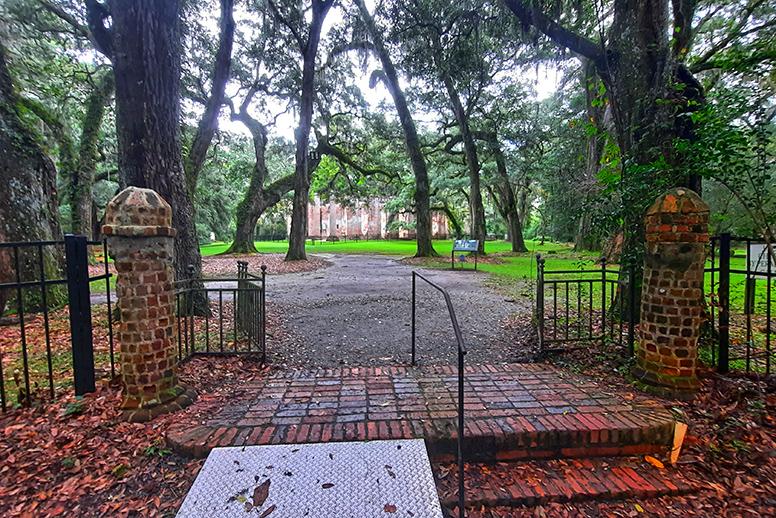
The site's entrance
photography by: Omri Westmark
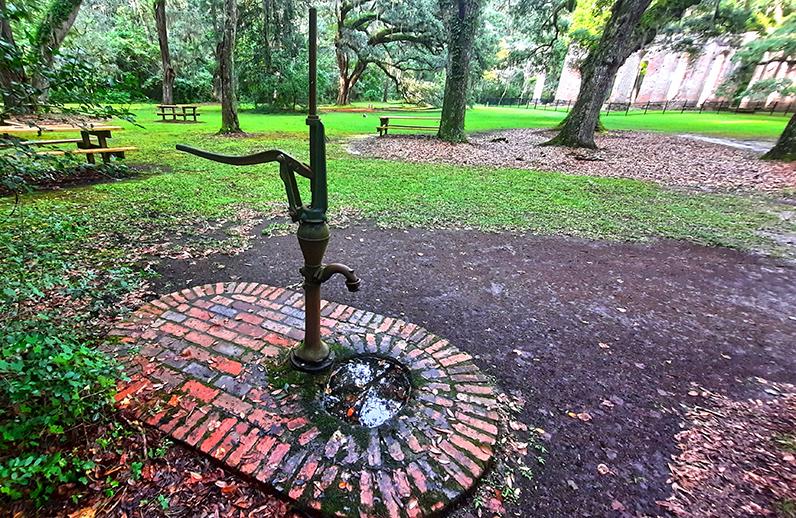
A fountain located in front of the ruins
photography by: Omri Westmark
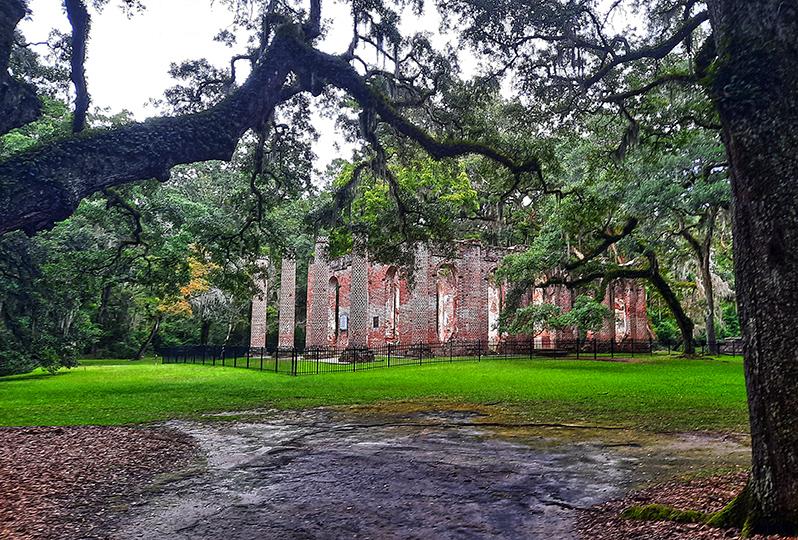
The church, partly obscured by the live oak trees
photography by: Omri Westmark
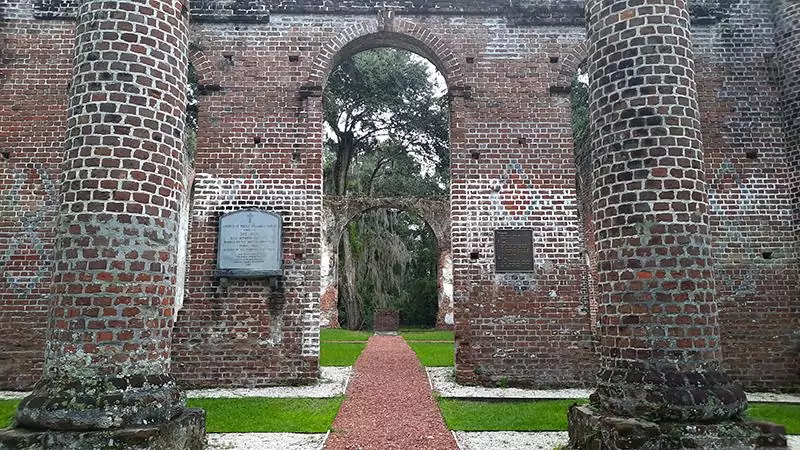
The building's entryway, once home to a massive portico
photography by: Omri Westmark
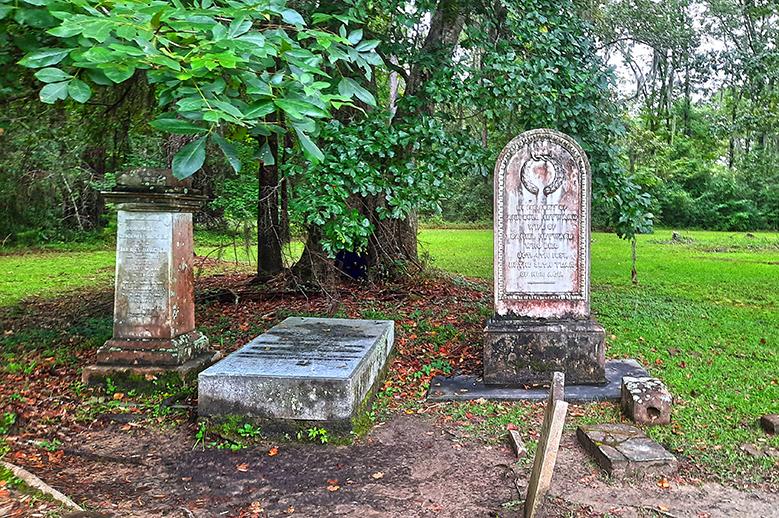
Several tombstones amid the site's verdant lawn
photography by: Omri Westmark
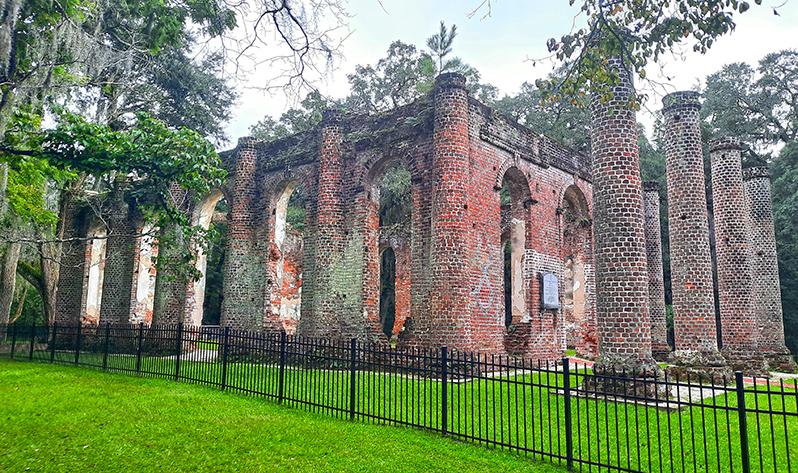
The church is fenced to protect what remains of it
photography by: Omri Westmark
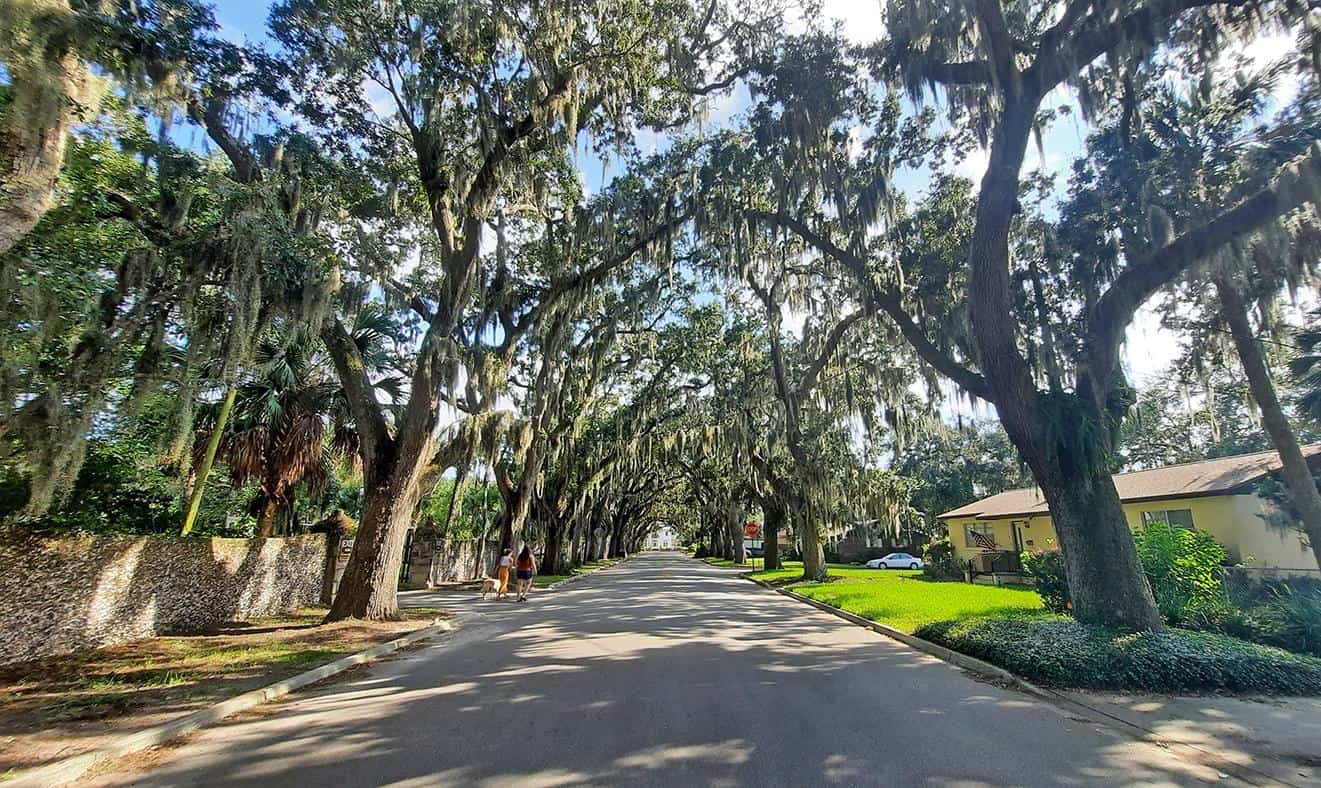
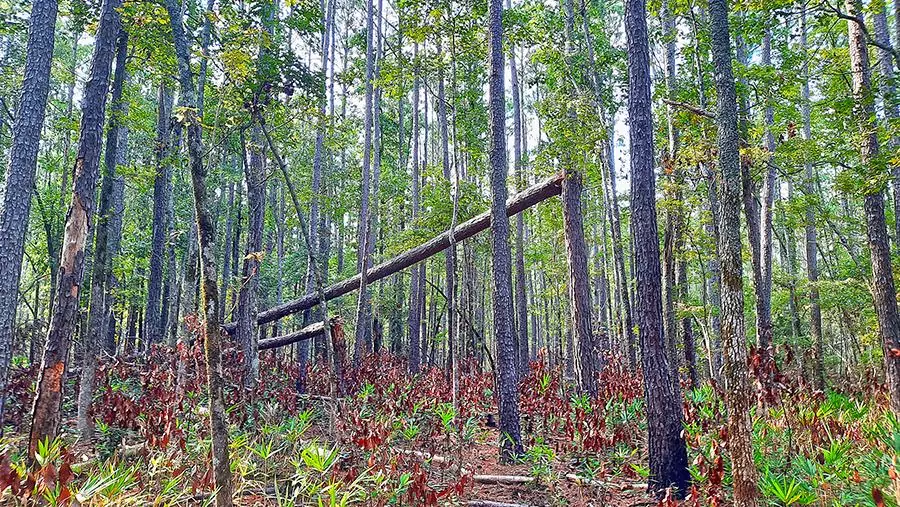
Whilst the church was never rebuilt again, its remnants, several columns and some of its outer walls, were reincarnated as an unusual tourist attraction, as well as a hotspot for prewedding photos. The ruins are immersed in a verdant woodland, where tombstones of the parish’s past members are scattered between old live oak trees draped in Spanish moss. The grave that lies within the dilapidated church belongs to Colonel William Bull, who took part in the planning of Savannah’s famous urban layout.
According to ghost hunters and ordinary visitors alike, the site is constantly haunted. Besides a series of unexplained instances where eerie and strong sounds of footsteps have been recorded, some people reported seeing actual ghosts. In one particular case, one of the graveyard’s dwellers, Ann Bull Heyward, has been spotted mourning over a child’s tomb. Whether those supernatural activities are a fable is up for you to decide, one thing is sure though, the former church’s dreadful past is offset by its current status as a true hidden gem.
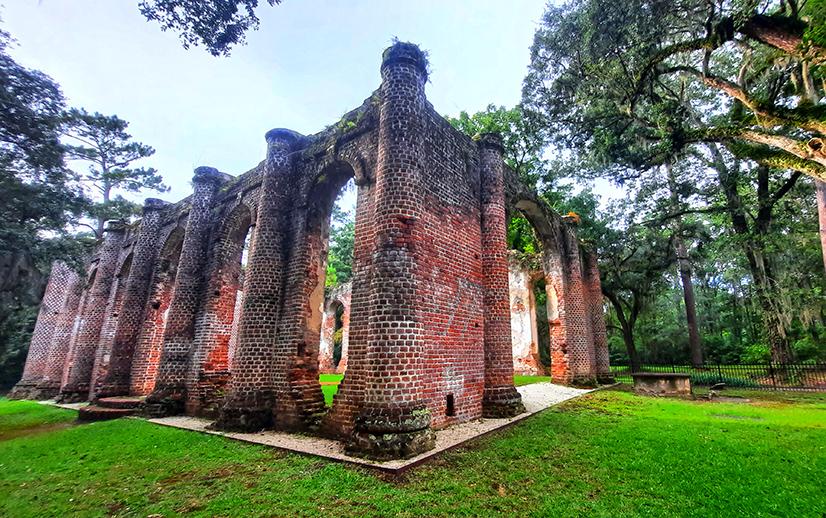
The original building was supported by a row of 7 Tuscan columns on each side
photography by: Omri Westmark
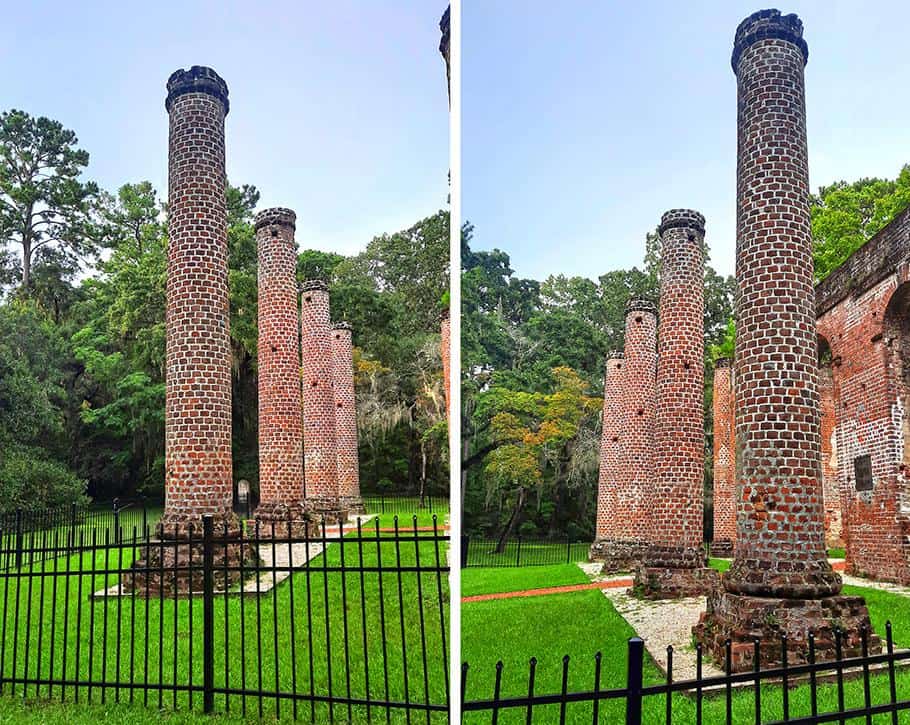
The edifice's original Tuscan columns
photography by: Omri Westmark
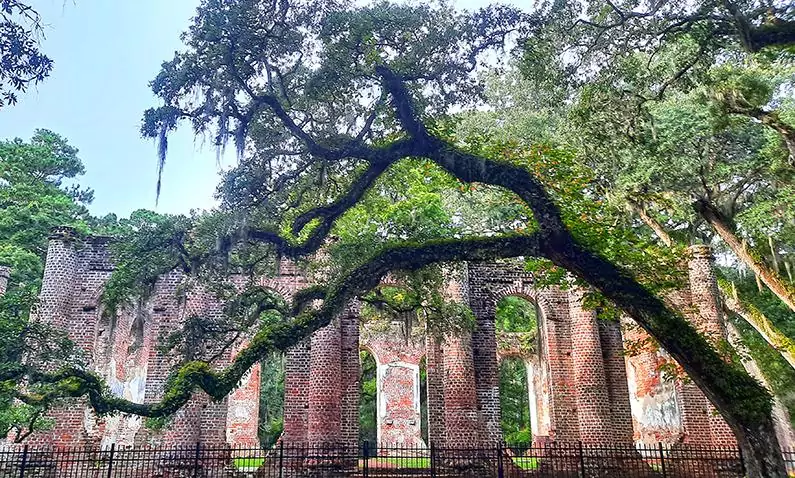
The Sheldon Old Church Ruins, surrounded by a wooded area
photography by: Omri Westmark
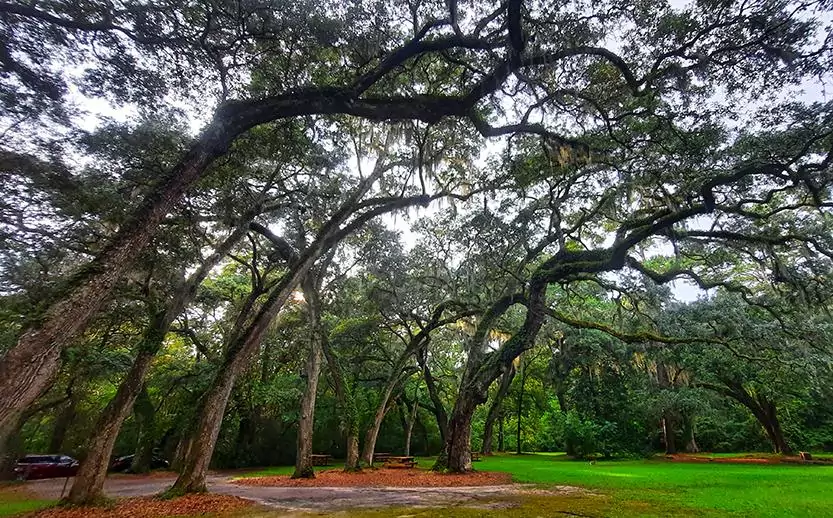
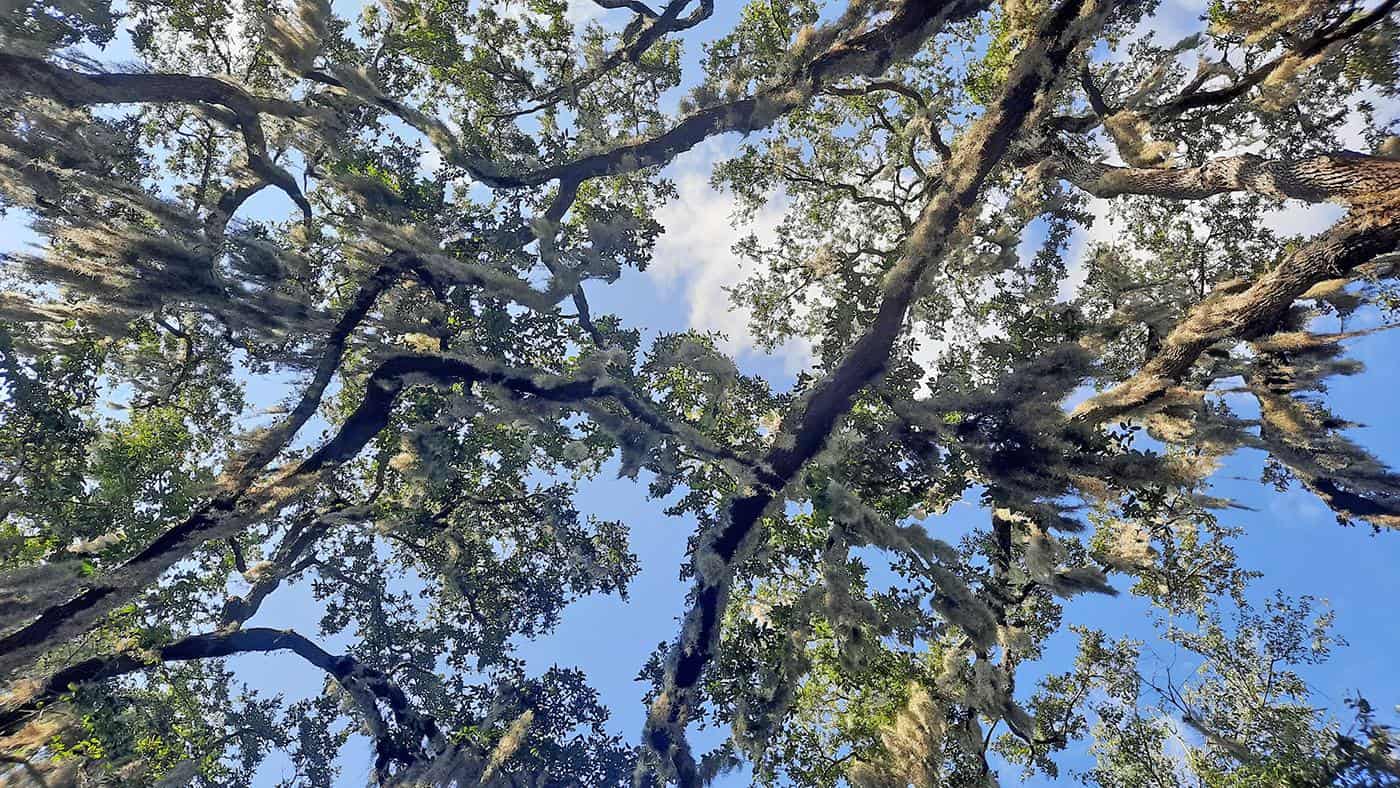
The site is home to dozens of oak trees, which are draped in Spanish moss
photography by: Omri Westmark